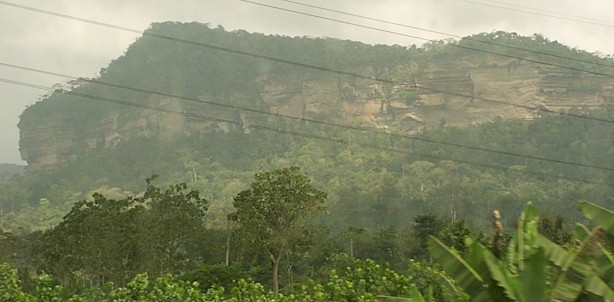
i just got back from kokrobite beach (home of rastas, ghanaian men in wet knit boxers and nothing else, and far too many tanned ex-pats and pink obruni tourists, and also taxi drivers, as shall be made apparent later). I am a little pink due to the fact that I kinda forgot to put sunscreen on my ass, thus resulting in the expected errm result. And I did not die, although it was close. Andrea and Elena, two girls from SF state, were my travel companions on this adventure. Things you have to look forward to in this story: pesto, a german shepheard dog, small naked children, SWIMMING IN THE GULF OF GUNIEA, and lack of death. Did I mention I didnt die? because its kinda a big part of this story. ok. here we go.
Part the First: epic travel TO the destination
We left at eight am. As in we ACTUALLY left at eight am, which usually doesnt happen, but I was up and ready and so were they, and there was none of the usual stopping for water, potty breaks, atm machines, etc that usually acompanies any off-campus venture. so we ended up at the trotro stop outside of campus at about 8:15 am on a Sunday morning. We were looking for a tro to Kineshi station, from whence we could catch another trotro to kokrobite, the beach, and this rumored really great restaurant that had fruit pancakes with chocolate sauce. The trip would have been worth it for the pancakes alone, by the way. Kineshi station is the next stop past Circle, which is one of the major destinations of trotros. Most dont go past it to the station, and we let four or five circle cars go because they werent going direct to kineshi. Then we decided (now its 8:35 or so) that since the church rush was starting we should just get a tro to circle and another one to the station and then another to the beach, making it a three tro trip. of course by the time we decided that, God had decided that we had used up all our chances to get a Circle car. So we were gifted with several Accra cars, a handful of Lapaz cars, and one 37 car in lieu of any ones going to circle. THEN we decided to take a car to 37 (on the way to circle) and get one to kineshi from THERE. we finally found one not totally impacted with god-fearing, african-fabric-wearing bible-toters, and within five minutes of alighting at 37 we found a car going to kineshi. At least according to the mate (forshadowing of doom here, please). So we get on, pay our peswas, and relax, knowing all is well with the world. Until he calls last stop at CIRCLE, not kineshi. When we put up a stink, he recruits one of the other passengers to show us to a bus that will take us to kineshi. We boarded the bus, along with aproxamatly one thousand small children, churchgoers, and assorted individuals. The guy sitting across the aisle from me was so spectacularly dressed that he bears mentioning. He was wearing typical ghanaian church clothes, which really take matching and coordinating to a new level of ...interesting. He had a pretty violently vertical-striped pink dress shirt (long sleeves, for the tropical humidity) on and tucked blousily into his brown and white PINSTRIPED pants, secured around slim hips by a pale brown leather belt that MATCHED HIS SHOES exactly. And his was not the only outfit exemplifying the ghanaian esthetic of matching striped shirts with pinstriped pants, or, indeed, two different kinds of striped shirt (say one vertical and one horizontal) together. It is going to be hard for me to dress when I get home, because my inner compass of dont-wear-that-out-of-the-house is totally re-calibrated to a country in which stripes match each other by virtue of their stripiness alone. After some bumps and another 20 peswas we arrived at Kineshi station. This place is to a bus- or train-station as the death star is to revolvers: a whole lot bigger and not yet organized enough to satisfy or serve anyone. we wended our way through booths set up and selling veggies, shoe polish, donuts, fruit, bread, rice, underwear, lightbulbs and batteries, shoes, towels, toothpaste and toiletries, and everything else you can imagine in every conceivable combination, over an overpass crowded with more of the same, and through a network of dust roads (edged in the usual two-foot-deep sewers full of plastic and a foul-smelling soup) to the corner lot holding the trotros to Kokrobite. so far, we were halfway there and it was already a three-tro journey. We found a bus, piled into it (getting shafted on our seat-choice because we showed up right in the middle of the passenger attraction and boarding process and so got to sit in the very back middle, and getting roasted alive because it was now almost 10 am and sunny), waited for it to fill up (with the smart passengers who waited for the magic signal that meant they got the center jumpseats/legroom/breeze) and took off. As the mate went about collecting fares, it became horrifically apparent that there was an extra man in the front of the bus. Who was talking. Loudly. In Twi. And dressed for church. Thats right, we were blessed with A PREACHER on board. Who proceeded to preach to a gradually more-interested crowd in an incomprehesible language (to me at least) punctuated by halleluias, jesuss, praise-lords and amens for the entirety of our journey. It included every aspect of a real church service including call-and-response (mainly from the woman behind me, who came in a few seconds late on EVERY SINGLE amen and jesus, but made up for it by being twice as loud as necessary), hymns (also see the woman behind me), and a COLLECTION, where people on the trotro paid him to bring them the word of god while they were on their way to wherever. When we finally arrived at the corner of two dirt roads dotted with chickens and crawled out from the back seat, it was with no small relief, let me tell you. We had arrived.
Part the Second: amazing meal #1
WARNING: THIS SECTION CONTAINS NO SARCASM. everything i say is true. no joke.
we went to this amazing restaurant, which did indeed serve fruit pancakes with chocolate sauce. they also had real toast and omlettes, french toast, fresh orange juice straight from heaven, and a whole menu of tasty lunch/dinner options too. I had the omlette, Elena had french toast, and andrea had the pancakes, with fresh actual real coffee. It was delicious like no meal i have had in ghana before. it was decadent. And the (italian-ish) owners of the place have a gorgeous dog that hangs around in the gazebo where the guests eat, sitting on our feet and just being a dog...no begging, just canine satisfaction with a job well0done. From there we wandered down teh dirt road, past more chickens, some baby goats, and the requisite small naked ghanaian children to the beach, where the waves were rolling in, the fishing boats were pulled up on the sand, an impromtu soccer match was being held between fishermen and rastas, and ghanaian creepers were walking up and down the beach checking out the obruni meat laid out on coloful towels and sarongs for their visual enjoyment.
Part the Third: the beach, the ocean, the rastas and the shopping
we laid out on the beach, read, slept, etc. I went swimming for like an hour with elena and then andrea, and we read/slept some more while my rear part got pinker, unbeknownst to me. At 3pm or so we decided we had had enough of being creeped on, sunned on and everything, and packed up. On our way off the beach we stopped at the rasta craft booths, where they sell scarves, jewlery, woodcarvings, used bathing suits, african-print clothing, and the like. Andrea bought presents for people bakc home and I got a pair of cool earrings. There is also a pretty intense trade in clothing made from floursacks, and it is entirely possible that i will come home with a pair of flour-sack wrap-pants.
Part the Fourth: decadent meal #2 (I might have already said this, I dont
remember, and gmail ate my first one)
After swimming in the ocean and shopping at the rastas' shops, we headed
back to the restaurant for another tasty meal before leaving for Accra. The
german shepherd dog was still camped out on the floor of the gazeebo, which
was now populated with slightly pink obrunis and this group of four
arab-looking guys. We got beers and placed orders for pesto pasta and a
green pepper pizza, and sat back on this couch-bench thing covered in
pillows (the fabric was SO COOL! bunches of little orange elephants parading
around on a purple background...my favorite!). We chatted about all kinds of
things, like how sunburned we were, how we kinda wanted to take a taxi home
(isntead of three trotros and walking all the way across campus), how we all
dressed BADBADBADLY in middleschool (but Andrea won best-dressed in her
eighth grade yearbook in Sweet Home, Oregon), and remembering the bad old
days of Old Navy performance fleece. Then the food arrived. Now, I have
tried to eat pizza in Ghana before, and the result usually resembles
cardboard covered in plastic cheese and frozen vegetables. This pizza,
however, had a REAL CRUST that was thin and crispy, delicious fresh
mozzarella cheese, onions, real garlic, bell peppers, and oregano in the
PERFECT flavor combination. It was the best thing I have eaten in Ghana.
Elena got pesto pasta, and I had some of that in exchage for a slice of
pizzaheaven. And THAT was the best thing I had eaten in ghana. Seriously.
This meal was SO delicious I was moaning...it was an italian foodgasm. It
was amazing. it was the most incredible meal.
We luxuriated over it for quite a while (elena had to get a pineapple
pizza after the green pepper one was so good, and the incredible thing
about getting a pineapple pizza in a country that actually grows
pineapples is this: the fruit on teh pizza is REAL, FRESH pineapple!
so it acutally tastes GOOD instead of awful!) AMAZING.
Part the Fifth: taxi ride to HELL (not a joke)
On the taxi issue, we decided that if we could find one for eight
ghana cedis or less we would take it, and if not we would tro it home
and walk. We truged our way (in food comas and small small drunk from
giant beers and lots of sun) up the dirt road past small naked
children, baby goats, chickens, etc and to the top of the road, the
'station' where the trotros stopped. Conveiniently, there was a taxi
parked right at the top of the road. Elena was deputized to negotiate
a fare with the driver, a tall Ghanaian man wearing a white tank top
and white nylon shorts and no shoes. He was folding a pair of pants as
we bargained, and as the trotro pulled up he finally caved and agreed
to our price to get to campus. He slimily asked who would sit in the
front seat, which was covered in clothes, so the three of us squeezed
in the back, exchanging glances of 'kinda skeeze? yes?' and watched
him get in and start up the car. He folded up into the front seat and
took the taxi out onto the road. It was still bright and sunny,
somewhere around five pm, but there were some clouds over the
mountains to the norith. in the midst of our small talk about which
obrunis he thought were friendliest (germans, then british, then
"maybe americans" grudgingly) and bits and pieces about how long we
had been in ghana etc, Andrea asked him if it would rain. He said No,
that if it did it wouldnt be until later, after sunset. He then
proceeded to weave back and forth in his seat as we went around
corners, bable randomly about things, and generally give a good
impression of someone under the influence of somethign like marijuana
(kokrobite, with all its rastas, is as close to hotboxed as you can
make a beach, and getting pot there is as hard as getting sand between
your toes). More glances exchanged, with 'shit, our taxi driver is
STONED' as the subtext. he then hauled his taxi over to the side of
the road to "pick up his tire" from a friend, and thunked the (bald,
ridiculusly old) thing in the back as his spare. And when he climbed
in the car he said that it was definitly going to rain. Off we went,
back to the main road now and on our way to Accra. In fast-darkening
clouds and something suspiciously like lightening. Going aproxamatly
seventy miles an hour. With severely impending gothic disaster storm
not so much on the horizon as breathing down our necks. going sevently
miles an hour in a taxi with bald tires and a stoned driver. into teh
mother of all storms. Time stopped for a while and all we could think
is 'oh my god we are going to die.' in a taxi going SEVENTY MILES AN
HOUR WITH A STONED DRIVER. Then it started to rain. The next hour can
be summed up by this image: Elena singing hebrew hymns, andrea in the
middle clinging desperatly to our hands, the driver babbling about how
all muslims are bad people and skidding and fishtailing, and me
leaning over the seat alternatly praying (seriously) and trying to
beat a little sociology into his head. We made it back to campus
alive, thank god and praise the lord. But for a while there it was
seriously in question.
The lightening was fantastic, though.
Sunday, March 9, 2008

Tuesday, February 19, 2008
Not dead, just resting ;)
It has been a while, yes, so I am doing a quick catch-up before jumping into the new school year. Here goes.
I went to Rome for Christmas, and it was wonderful to have both of my parents all to myself for over a week. I think that was a first. Walking through the ruins of so many centuries of civilization and spirituality and creativity in one place took my breath away. There was this little cafe we stopped at on Christmas Eve, and on the way there we walked out from this narrow little (twisty-turny) alley into a small plaza. There were tall apartment buildings all around, like your standard European city, and little smartcars zooming and honking, but in the middle of all of this modern hustle and bustle was a fenced-off enclosure. The grass was so green in it, and there were many many cats all sitting around, and out of the grass, like they had grown there a thousand years ago, were the ruins of someplace that felt as sacred as St. Peter's Basilica. Somehow it didnt feel like a contradiction at all to have that kind of peace in the middle of chaos. All of Rome was like that: peace and beauty in the middle of teeming life. It was a refreshing change from Ghana in some ways, and in others it made me miss this place. I was really taken aback by paying four euros for a latte the first time, and telling tales of Ghana made me miss the people and places I talked about. But the food was AMAZING. Ah, salad...
My journey back to Ghana from Rome was the usual 48 hours of public transportation, lack of sleep, and general discombobulation that seems to follow me every time I leave Europe. I had a whole day to myself after Mom and Dad left, and I spent a lot of it sitting in Piazza Popolo watching this Pakistani guy put on makeup and costume and set up standing as Lady Liberty. I went to mass, wandered in the park, and wrote in my journal. Then in the evening I made my way to the airport and camped out in the international terminal for the night. I listened to the new cd's that Tesla and Dad burned for me, did a lot of staring around, had a good conversation with this random french guy at four am, and finally gave up on sleeping. I brushed my teeth and went looking for my flight at about 9 am, poking into all the international terminals (not thinking that my flight was going to Milan, which is of course a DOMESTIC flight). I found it and it left pretty much on time, which was good, because my connecting flight to Lagos and Accra had only about an hour layover. At Milan I headed to the gate, only to find that a) it was burried in the basement, and b) the flight was delayed indefinitly. Also, there were none of the usual helpful people behind the counter waiting to assist. Only me, another obruni woman and her son, a really nice Ghanaian woman and her little baby boy, a whole bunch of Muslims (coming back from Hajj I think) who gathered in the back corner every hour, faced the right direction, laid out their mats (men in front in two rows, women quiet in the back) and said prayers, and a ton of Nigerians and Ghanaians. Every forty minutes or so, someone would ask their neighbor when the flight was going to leave, and no one knew. It was scheduled to depart at about 3pm, and we finally started boarding at a little after 7. By that time, I had become fast friends with the Ghanaian woman whith the baby, so I helped her fold her stroller. The typical qeue thing happened, where everyone got up in a lump and stood in no sort of order at the gate for forty minutes before anything happened, and finally we were walking across the (freezing cold) tarmac to the plane, parked far far away. By this time I was going on less than two hours of sleep, and I hadn't eaten since the snack biscuts on the plane to Milan about six years before. And the flight was four hours behind schedule. We all got loaded and settled, and lucky me got to sit near ALL the children, who had been put in the same few rows so that their irritation and exhaustion could feed off itself, I guess. Then one of the passengers couldnt be located, and of course he had checked bags, but the airline is unable to fly a bag without a passenger, so we had to wait for another hour and a half while they went through EVERY bag in the hold to find his stuff. When we finally did take off I feel asleep somewhere over the Sahara desert and awoke in Nigeria. Most of the plane got off, and a few new passengers were added for our short hop to Accra. It was new years day.
Landing in Accra felt like coming home, even though it was four am. It was humid, and Ghanaian accents everywhere welcomed me. I got my bags and tried to get a taxi, but of course they charged me about four times as much as they should have...I tried to bargain the first guy down and he just flipped his hand at me and drove away. When I got back to good old Volta Hall (tired beyond imagining, frustrated by the taxi situation, and ready to sleep FOREVER), the porters couldnt find my key. I had to sleep in the room of one of my obruni sisters because Uncle Ben, the head porter, had held my key for me while I was out of the country. When I finally did get to a bed I passed out for almost 20 hours. It was heaven to be home.
The Ghana I came back to in January was not the Ghana I had left in December, though. For one thing, almost all the students were gone for the holiday. And the Hamattan winds, blowing hot and dry off the desert every day, made everything dusty and hazy. I spent two and a half weeks in January going on day trips to Aburi and local waterfalls, reading many books, getting my grades (all good, by the way! despite the fact that the final exam is 100% of the grade), and generally trying to adapt to a different pace of life than I was expecting. After I stopped trying to make my world something it wasnt, and focused on just letting it be, I started to really enjoy myself in a very slow, calm, relaxing way. I have never in my life had a whole month with literally NOTHING to do. I didnt have to feed any animals or people except myself (because my cat had not returned), I did not have anything at all that I absolutly had to do, I had nowhere to be and no demands on my time except ones I chose. It was freeing in a way, but if I had to live like that for any longer than a month I would probably go insane.
On the 20th of January, the African Cup of Nations came to Ghana. Which was a HUGE adventure! I am not really a sports person back home, but for some reason football in Africa is the exception to that rule, like so much in Africa is an exception to rules. I watched matches at the hall and at Tyme Out, a littel beer and rice place on campus. Fans here take it to a whole new level of obsession, and their energy was contagious. I got really into watching matches, and I even had a favorite team (aside from Ghana, of course): Egypt. By the time that quarter-finals and Semi-finals rolled around both teams were doing really well, and Egypt actually won the final cup (for the sixth year). It was wonderful.
On the 31st, I turned 23 and the new obrunis from California arrived. I got a surprise cake and a whole bunch of new friends, and it just proved that every birthday I have ends up being the best birthday I've had. It was wonderful (although the thought that I was in middle school TEN YEARS ago made me feel a little weird).
Talking to the new kids about their experiences and observations really put me back in the mindset of Ghana-as-exotic-place, and reminded me of all the things I was thinking and feeling. It is interesting to be shown a mirror of my former mindset, actually.
Personal life notwithstanding, I am having a wonderful time right now, and with the return of Ghanaian students and the start of school, I have much to look forward to. So, here's to looking forward!
I went to Rome for Christmas, and it was wonderful to have both of my parents all to myself for over a week. I think that was a first. Walking through the ruins of so many centuries of civilization and spirituality and creativity in one place took my breath away. There was this little cafe we stopped at on Christmas Eve, and on the way there we walked out from this narrow little (twisty-turny) alley into a small plaza. There were tall apartment buildings all around, like your standard European city, and little smartcars zooming and honking, but in the middle of all of this modern hustle and bustle was a fenced-off enclosure. The grass was so green in it, and there were many many cats all sitting around, and out of the grass, like they had grown there a thousand years ago, were the ruins of someplace that felt as sacred as St. Peter's Basilica. Somehow it didnt feel like a contradiction at all to have that kind of peace in the middle of chaos. All of Rome was like that: peace and beauty in the middle of teeming life. It was a refreshing change from Ghana in some ways, and in others it made me miss this place. I was really taken aback by paying four euros for a latte the first time, and telling tales of Ghana made me miss the people and places I talked about. But the food was AMAZING. Ah, salad...
My journey back to Ghana from Rome was the usual 48 hours of public transportation, lack of sleep, and general discombobulation that seems to follow me every time I leave Europe. I had a whole day to myself after Mom and Dad left, and I spent a lot of it sitting in Piazza Popolo watching this Pakistani guy put on makeup and costume and set up standing as Lady Liberty. I went to mass, wandered in the park, and wrote in my journal. Then in the evening I made my way to the airport and camped out in the international terminal for the night. I listened to the new cd's that Tesla and Dad burned for me, did a lot of staring around, had a good conversation with this random french guy at four am, and finally gave up on sleeping. I brushed my teeth and went looking for my flight at about 9 am, poking into all the international terminals (not thinking that my flight was going to Milan, which is of course a DOMESTIC flight). I found it and it left pretty much on time, which was good, because my connecting flight to Lagos and Accra had only about an hour layover. At Milan I headed to the gate, only to find that a) it was burried in the basement, and b) the flight was delayed indefinitly. Also, there were none of the usual helpful people behind the counter waiting to assist. Only me, another obruni woman and her son, a really nice Ghanaian woman and her little baby boy, a whole bunch of Muslims (coming back from Hajj I think) who gathered in the back corner every hour, faced the right direction, laid out their mats (men in front in two rows, women quiet in the back) and said prayers, and a ton of Nigerians and Ghanaians. Every forty minutes or so, someone would ask their neighbor when the flight was going to leave, and no one knew. It was scheduled to depart at about 3pm, and we finally started boarding at a little after 7. By that time, I had become fast friends with the Ghanaian woman whith the baby, so I helped her fold her stroller. The typical qeue thing happened, where everyone got up in a lump and stood in no sort of order at the gate for forty minutes before anything happened, and finally we were walking across the (freezing cold) tarmac to the plane, parked far far away. By this time I was going on less than two hours of sleep, and I hadn't eaten since the snack biscuts on the plane to Milan about six years before. And the flight was four hours behind schedule. We all got loaded and settled, and lucky me got to sit near ALL the children, who had been put in the same few rows so that their irritation and exhaustion could feed off itself, I guess. Then one of the passengers couldnt be located, and of course he had checked bags, but the airline is unable to fly a bag without a passenger, so we had to wait for another hour and a half while they went through EVERY bag in the hold to find his stuff. When we finally did take off I feel asleep somewhere over the Sahara desert and awoke in Nigeria. Most of the plane got off, and a few new passengers were added for our short hop to Accra. It was new years day.
Landing in Accra felt like coming home, even though it was four am. It was humid, and Ghanaian accents everywhere welcomed me. I got my bags and tried to get a taxi, but of course they charged me about four times as much as they should have...I tried to bargain the first guy down and he just flipped his hand at me and drove away. When I got back to good old Volta Hall (tired beyond imagining, frustrated by the taxi situation, and ready to sleep FOREVER), the porters couldnt find my key. I had to sleep in the room of one of my obruni sisters because Uncle Ben, the head porter, had held my key for me while I was out of the country. When I finally did get to a bed I passed out for almost 20 hours. It was heaven to be home.
The Ghana I came back to in January was not the Ghana I had left in December, though. For one thing, almost all the students were gone for the holiday. And the Hamattan winds, blowing hot and dry off the desert every day, made everything dusty and hazy. I spent two and a half weeks in January going on day trips to Aburi and local waterfalls, reading many books, getting my grades (all good, by the way! despite the fact that the final exam is 100% of the grade), and generally trying to adapt to a different pace of life than I was expecting. After I stopped trying to make my world something it wasnt, and focused on just letting it be, I started to really enjoy myself in a very slow, calm, relaxing way. I have never in my life had a whole month with literally NOTHING to do. I didnt have to feed any animals or people except myself (because my cat had not returned), I did not have anything at all that I absolutly had to do, I had nowhere to be and no demands on my time except ones I chose. It was freeing in a way, but if I had to live like that for any longer than a month I would probably go insane.
On the 20th of January, the African Cup of Nations came to Ghana. Which was a HUGE adventure! I am not really a sports person back home, but for some reason football in Africa is the exception to that rule, like so much in Africa is an exception to rules. I watched matches at the hall and at Tyme Out, a littel beer and rice place on campus. Fans here take it to a whole new level of obsession, and their energy was contagious. I got really into watching matches, and I even had a favorite team (aside from Ghana, of course): Egypt. By the time that quarter-finals and Semi-finals rolled around both teams were doing really well, and Egypt actually won the final cup (for the sixth year). It was wonderful.
On the 31st, I turned 23 and the new obrunis from California arrived. I got a surprise cake and a whole bunch of new friends, and it just proved that every birthday I have ends up being the best birthday I've had. It was wonderful (although the thought that I was in middle school TEN YEARS ago made me feel a little weird).
Talking to the new kids about their experiences and observations really put me back in the mindset of Ghana-as-exotic-place, and reminded me of all the things I was thinking and feeling. It is interesting to be shown a mirror of my former mindset, actually.
Personal life notwithstanding, I am having a wonderful time right now, and with the return of Ghanaian students and the start of school, I have much to look forward to. So, here's to looking forward!
Wednesday, November 21, 2007
Giving Thanks
I have been in Ghana for almost four months now. And every week seems to go by faster than the one before. I recently pulled out my paper journal and re-read an entry I made waiting in the Frankfurt airport for the final flight that would bring me to Africa, this place I had studied and dreamed about but could not really truly imagine. And reading my words, feeling the same excitement tinged with uncertainty and notquitefear, made me realize how far I have come in the last four months, how much I have grown up, grown into myself, and how much I have learned. Thanksgiving is tomorrow, and I have almost eight more months to go here, and they will be full of as much adventure, as much learning and growing and discovering as these four months have been. There are days that I wake up and it takes me a moment to realize that I am in Ghana, and there are days that make me feel like I have been here forever. This trip, the slight terror and immense joy I felt waiting for it to begin, the sum total of all that has happened and is happening and will happen to me here, might just be the best thing I have ever done. When I go home and people ask how Ghana was, how will I answer? Ghana was like a second home, another garden to put down roots in, another place to fold into my heart and treasure and hold. What am I giving thanks for? The chance to be here, and whatever told me that I needed to come. Because I am more now, in an incomprehensible way. Thank you.
As Beginnings Go
The airport is clean and almost hospital sterile, which is not unusual (in her past experience, at least. In a few hours all of that will change forever). She makes her way through crowds of people who mostly don't speak her language, letting them drift past her and their words flow through her. She hitches her red backpack higher on her shoulder and follows signs to her destination, all alone on the middle leg of her journey, in the middle of a continent she has visited before, on her way to something she knows she can not even imagine, which has never stopped her from trying.
Finally she reaches her gate, and is brought up short: there are two lines (queues, she reminds herself, they are queues now) and no indication of what people are standing waiting for. And she is, for the first time on her adventures, different, in that way that only your skin color can make you. Never in her life has this girl, this on-the-verge-of-woman, felt her skin as a thing with a life separate from herself. Never has she seen herself as an outsider, an other, a someone-not-like-us. And that, more than tearful goodbyes in the airport, going through security, or any of the other busywork business of travel, brings it home: she is not in Kansas anymore, Toto, not surrounded by anything close to familiar, and she has only just begun this trip, this year-long journey to find herself or follow her dream or just get the hell out of town. Whatever the reason du jour, she needed to leave, could not understand why, but could feel that need slipping and burning under her skin, an emotional growing pain. And now that her skin is burning again, she asks herself why she had to leave, and realizes that it doesn't matter. She is here. She has performed the act of leaving, that single step that begins any journey, that first long, hard fall. And as she watches (observes, putting long-practiced skills to use), finds the right queue, enters the waiting area, and finds a seat, she knows. This will not kill her. Yes, she is uncomfortable, really and truly uncomfortable, for the first time in her life. But that discomfort will not kill her, and it will pass. Yes, she is alien or different or one of those words, but that life experience is not unique to her, and it will be a valuable feeling to pull out and remember in six months, when she is comfortable, though the thought of being comfortable seems about six thousand months away at the moment. So she takes a breath, puts down her bag, and looks around.
Most of the seats in the waiting area are full, and more people are handing their passports over to the guard, awaiting permission to enter. There is more foreignness in this small space than she felt the first time she saw Paris or Amsterdam or any other place she has been, and maybe that has something to do with the deep, quiet voices rumbling in languages she can not even begin to identify, or maybe it has something to do with the riot of color and pattern and cut of clothing that covers all of the people packed in around her. A group of nuns in full habit, right out of The Sound of Music, shuffles past in ugly utilitarian shoes and thick support hose, clutching giant handbags and whispering to each other. A family, small son and required infrastructure secured to a stroller, lounges against the wall, father peeking at his large gold watch and adjusting the belt around his waist that exactly matches his tan leather shoes. Old men and young men, children and mothers and grandparents, single travelers and whole tribes, all gather around and wait for the signal to board the plane. As beginnings go, it is a good one.
Finally she reaches her gate, and is brought up short: there are two lines (queues, she reminds herself, they are queues now) and no indication of what people are standing waiting for. And she is, for the first time on her adventures, different, in that way that only your skin color can make you. Never in her life has this girl, this on-the-verge-of-woman, felt her skin as a thing with a life separate from herself. Never has she seen herself as an outsider, an other, a someone-not-like-us. And that, more than tearful goodbyes in the airport, going through security, or any of the other busywork business of travel, brings it home: she is not in Kansas anymore, Toto, not surrounded by anything close to familiar, and she has only just begun this trip, this year-long journey to find herself or follow her dream or just get the hell out of town. Whatever the reason du jour, she needed to leave, could not understand why, but could feel that need slipping and burning under her skin, an emotional growing pain. And now that her skin is burning again, she asks herself why she had to leave, and realizes that it doesn't matter. She is here. She has performed the act of leaving, that single step that begins any journey, that first long, hard fall. And as she watches (observes, putting long-practiced skills to use), finds the right queue, enters the waiting area, and finds a seat, she knows. This will not kill her. Yes, she is uncomfortable, really and truly uncomfortable, for the first time in her life. But that discomfort will not kill her, and it will pass. Yes, she is alien or different or one of those words, but that life experience is not unique to her, and it will be a valuable feeling to pull out and remember in six months, when she is comfortable, though the thought of being comfortable seems about six thousand months away at the moment. So she takes a breath, puts down her bag, and looks around.
Most of the seats in the waiting area are full, and more people are handing their passports over to the guard, awaiting permission to enter. There is more foreignness in this small space than she felt the first time she saw Paris or Amsterdam or any other place she has been, and maybe that has something to do with the deep, quiet voices rumbling in languages she can not even begin to identify, or maybe it has something to do with the riot of color and pattern and cut of clothing that covers all of the people packed in around her. A group of nuns in full habit, right out of The Sound of Music, shuffles past in ugly utilitarian shoes and thick support hose, clutching giant handbags and whispering to each other. A family, small son and required infrastructure secured to a stroller, lounges against the wall, father peeking at his large gold watch and adjusting the belt around his waist that exactly matches his tan leather shoes. Old men and young men, children and mothers and grandparents, single travelers and whole tribes, all gather around and wait for the signal to board the plane. As beginnings go, it is a good one.
Monday, November 19, 2007
Down Home on the Farm, or My Ghanaian Family
The sky is pregnant with impending storm, hanging like a damp, grey wool blanket above campus, smothering the usual Sunday sounds of church music and celebration, and stifling any cool breeze. It is a strange experience after my sunny smiling adventure of yesterday.
In my Arabic class there are several people who are my friends, and a few people who study with me. Of those, Fareed is by far the closest. He came by to visit me when I missed class because of Malaria, copies my notes, and generally is a very good person. When we were talking once about favorite foods, or maybe what I love about
[side note on trotro etiquette: (reminder: a trotro is pretty much a van with four benches in it, some working windows, stickers and sayings everywhere, no seatbelts, a very shaky chassis, and a general air of exhaustion and imminent collapse. The driver sits on one side of the front seat, which usually also holds two or three passengers, and the mate rides in the body of the vehicle with the bulk of the passengers, opening the sliding door (and sometimes holding it closed), calling out stops and destination, taking money, arguing fares, and loading and unloading the various passengers’ cargo of pieces of beds, animals, bags of produce and charcoal and anything else imaginable) When boarding a trotro, it is polite to move to the back, taking the furthest seat possible. Once a bench is filled with people (anywhere from two to five, depending on size, personal space bubble, amount of luggage, and general orneriness of the mate, who will sometimes pack people in mercilessly), the little bucket seat in the aisle is folded down and filled, completely blocking the bench behind it. If someone from the rear bench needs to get out, then, it follows that all of the aisle-seated passengers will need to get up, and out of the car, for that person to exit the vehicle. So at pretty much every stop people pile out of the trotro to let someone off and pile back in, filling in the empty space. Over the course of a ride, it is possible to go from sitting directly behind the mate in an aisle seat closest to the door to sitting in the very back corner. This, the screaming goats, the fretful small children, and the truly giant unwashed masses are all part of the charm of this form of transportation, and only add to the sense of adventure. I promise.]
It was a four-tro journey, as it turns out. We were planning on leaving at about 8:30 in the morning on the ’45-minute’ trotro ride and I thought we would return by 1:30 or so. Mikaela was going to join us but opted instead for a beach getaway vacation with Steve instead, so it was just Fareed and I walking down the main road of campus to the taxi and trotro station across the street at 8:30 on Saturday morning, discussing the myth of
The trotro stopped at Second Power, which was the stop for his parents’ house (though it looked to me like just another stretch of dirt road lined with cement walls, iron gates, lean-to stores and ditches). I spilled out of the trotro with my usual grace(lessness) to stand on the side of the road just at a footpath leading through a cornfield to another red dirt road. Waiting on a stool in the shade of an empty store was a dignified old man in a white polo shirt and a grey checked cap. He reached out to take my hand and I asked, “Ete sen?” which got a laugh and broke the ice a little. Fareed’s father (as the gentleman turned out to be), led us through the corn to his family house on the other road, behind the cement walls and a red-painted iron gate. Inside this enclosure was a paradise of tropical trees and flowers cuddled up to a blue-green house looking out on a yard with the usual dog, cats, goats, etc. Fareed’s mother came out to greet us, a beautiful matriarch wrapped in colorful fabric and carrying a little boy. She also laughed at my attempts at Twi, and the boy in her arms, Fareed’s nephew, hid his face because he had never seen a white person before and was scared of me. Soon after we arrived Fareed’s twin sister Faridah came out to say hello, and introduced me to her son (the baby), correcting me when I told her he was beautiful, because in
We walked back through the cornfield, caught a trotro to the main road passing the town, from there caught a trotro to a filling station in the village of Nswame, and from there caught another trotro heading out to the farmlands outlying the village. The roads are all dirt, and when it rains (right now about three times per week) they turn into rivers, eroding and evolving into slippery red mudslides that destroy any road-like features before hardening into clay again, leaving ruts, holes, little valleys, and dry washes inscribed permanently on the face and lying in wait for over-full trotros, taxis, big trucks, and any vehicle foolish enough or desperate enough to attempt a traversal. So the final trotro ride resembled less a ride and more a mountaineering expedition engaged on a micro level. At one point I looked out the window (with one hand on the metal side of the car so that I did not get a concussion from an unexpected rut) and took a look at the road, and just laughed, because there was a four-foot gulch in front of us with no trotro-sized path that I could find, and yet the driver dropped from first gear into some lower gear (that must only be available in rural Africa) and lay on the horn before inventing a new dimension and somehow not folding his vehicle in half. And the next thing I know? We are back to very bouncy ruts in the road, no one is blinking in surprise at the miracle we just witnessed, and Fareed is telling me that the most valuable investment someone could make in
The trotro dropped us at a dirt crossroads marked by a giant tree in the middle of cornfields, orchards of pawpaw trees (skinny little anorexic palm-looking trees with clusters of papayas sitting smug and green at the top, ten feet off the ground), and general explosions of green growing things lining a round bowl of a valley cupped in the hands of beautiful grey-green mountains. Hidden behind trees was a house belonging to Fareed’s uncle, and I followed him and his father up the steps to the porch, where a be-spectacled little grey haired man was enjoying his lunch. I was introduced and he exclaimed over Fareed, who, I had figured out by this time, was a bit of a prodigal son, since he had not been to see his family since he went to secondary school at cape coast four years ago. More pictures were taken, especially of the HUGE tree and the mountains, and we proceeded up the road towards the farmhouse.
In a lot of ways being there reminded me of visits to Uncle Steve and Aunt Connie when they were living up Monticello Road, when everyone would sit on the porch and just relax and talk for hours when visitors came, but you could still feel the tasks and trials waiting for attention because it was a working ranch. This place, for all that it was in tropical West Africa and the conversation was about pineapples and plantains instead of cows and all talk was in a mixture of Twi and Ga, had exactly the same feeling of being a working farm taking time out to entertain in its own modest way. Only about one vehicle per hour passed on the road (making it very different from the Connie and Steve’s house, I know), so it was the quietest place I have been in
After the tour we sat in the yard and ate fresh-picked fruit still warm from the sun and sinfully sweet and juicy, and looked out over the fields and watched the skinny farm cats chase baby chickens until the mamma hen got mad. Fareed’s cousin Becky came out to sit with us for a while and teased Fareed for not having visited at all in the last millenium, then disappoeared to teh kitchen adn kept plyuing us with fresh fruit, folowed by kenkey with fish (all the cats came out of the woodwork for that, and were rewarded for their grumbling, mewling efforts with the skeletons from the fish, and bits that dropped from my inexperienced fingers) Fareed taught me the proper way to eat kenkey, rolling the fermented corn dough between fingers and thumb of my right hand before delicatly dipping it in the tomatoe sauce and popping it into my mouth. It is harder than it sounds and much harder than it looks, especially with the buildup of sticky kenkey dough on fingers, my tendency to take either far too much or not close to enough dough at any given time, and the bits of fish bones that the cats keep crying for. Not to mention the gorgeous view i have of mountians over the tops of corn every time i look up. Fareed suffers from the same affliction that many of my Ghanaian guy friends suffer from: they keep telling me I need to eat more. Which is wonderful, but it goes against all of my early conditioning, and also? Kenkey is really filling. Becky brought us more fruit, and I chatted with Uncle Simon about agriculture in California and growing up without plantains as a staple while Fareed and Becky took a twelve-foot-long bamboo pole and ventured into the nearest pawpaw orchard to harvest a blue plastic feed-sack full of pawpaws and plantains.
It was wonderful to get away from campus for a day, to escape to and explore somewhere so different and yet so welcoming and familiar. And, fresh fruit? Never a bad plan. But maybe the miracle of the day was how open everyone I met was. Fareed's mother wanted to know when I was coming back so that she could cook a meal for me, and invited me to stay at their house if I ever need it. His father was laughing at my jokes and observations by the time we said goodbye, and I honestly love his twin sister. The pace of life in this country is sometimes difficult to deal with, but the things I rely on in America to keep me grounded (family, friends) exist here too, and that erases or makes up for all the challenges I face. I have a Ghanaian family, and I have reached another level of comfort and connection with this country and these people. The roots I feel developing are stronger than ever now, just of a different tree than I had before. Maybe I am a different kind of person here, but I don't think so. I feel like more of myself here than I have before, like I am growing into who I want to be.
Friday, November 9, 2007
Things that (shouldn't) go unnoticed
an orange-brown soy milk box, kindergarten size, cradled delicately in the roots of tree, held by corners only, floating above the ground
two dragonflies, exhibitionists, clinging to a florescent light and locked in shimmering gossamer love.
black sequins in a matte black sea carefully sheltering a pure mind opening devoutly to Friday morning prayers
the slicing blade of a machete in black hands bent low, sending the sharp sweet scent of cut grass as an offering to the morning breeze
fluttering butterfly with yellow rose petal wings dancing accidentally through the classroom
sun-warmed lizard scurrying on splayed-toothpick legs, long tail trailing dutifully
flashing ten-year-old grins and bumping shoulders as blue-checked shirts make their way to school and another day of adventure
the stillness of exhaustion written in every line of her body as she bends over another boiling kettle, tending the never-ending needs of a canteen full of mouths
muted murmured greetings and secret handshake as old friends good friends true friends meet again
night-shadowed true love sworn in hushed voices on the steps of home as the specter of curfew creeps ever closer
ghostly remains of lessons past traced in spidery shadows over each other and the ancient black board, reduced in a moment to drifts of dust
two dragonflies, exhibitionists, clinging to a florescent light and locked in shimmering gossamer love.
black sequins in a matte black sea carefully sheltering a pure mind opening devoutly to Friday morning prayers
the slicing blade of a machete in black hands bent low, sending the sharp sweet scent of cut grass as an offering to the morning breeze
fluttering butterfly with yellow rose petal wings dancing accidentally through the classroom
sun-warmed lizard scurrying on splayed-toothpick legs, long tail trailing dutifully
flashing ten-year-old grins and bumping shoulders as blue-checked shirts make their way to school and another day of adventure
the stillness of exhaustion written in every line of her body as she bends over another boiling kettle, tending the never-ending needs of a canteen full of mouths
muted murmured greetings and secret handshake as old friends good friends true friends meet again
night-shadowed true love sworn in hushed voices on the steps of home as the specter of curfew creeps ever closer
ghostly remains of lessons past traced in spidery shadows over each other and the ancient black board, reduced in a moment to drifts of dust
Thursday, November 8, 2007
You Look Happy. What's Your Secret?
I was walking past the Balme library trying not to die on the roundabout (amazing for cars, kinda like death in a circle for pedestrians), and a Ghanaian guy and his friend, total strangers, stop me and say, "You look so happy! What's your secret?" I grin even wider than I was, turn to them and reply, "I'm in Ghana. That's my secret." And today at that moment, it was true. I have moments here that are isolated, moments that are lonely or scary or painful or boring, but most of the time I really enjoy myself trying to find new ways to fit an obruni peg into obibini life. And there are moments that are just there, where I am totally at peace and in the perfect place at the perfect time and able to take a moment to enjoy it.
Last night I went with Mikaela, Steve, John and Sirena to Desperado's, which is a restaurant/bar up at the Vandal City of Commonwealth. The only food they serve there is banku, but it is delicious. The girl behind the counter remembered me, so she brought our food out to us specially, setting out plates of spicy pepper sauce, shito, and chopped onions, pieces of grilled fish (that would be pretty much the WHOLE fish, no head but everything else including bones, fins, skin, etc), and fist-sized balls of banku, a thick paste made from fermented corn. It tastes like sourdough bread a little. We washed our right hands, holding them over a bowl in the center of the table and pouring water from a pitcher provided for the purpose. Eating hand appropriately clean, we unwrapped the banku and I set about de-boning my fish, first taking off the fins, then peeling off the top half of the flesh and pulling out the bones. Everything ready, I dug in, pinching of pieces of banku and dipping them in pepper sauce, alternating the sour-spicy with rich grilled fish and sips of bitter Star beer. We ate slowly, chatting about nonsense and looking out to see the glittering lights of Accra and the campus visible between the trees and spread out beneath us. I felt like royalty.
No wonder the commonwealth boys feel like they are the colonial masters of the school: they look down every day from their palace or temple on the hill and survey their underlings or something. Seriously, they have the most incredible view. It is second only to the view from the very top of Volta hall, where I found myself with Mikaela and Steve and another girl from our program named Elliot. None of the Volta girls go on the roof, so its kind of become the unofficial obruni hangout place, where everyone goes to smoke cigarettes and relax and just look out. From the top (its four or five stories) you can see even further than you can from Desperado's, almost to the mountains to the east, and down the coast to the west. And last night the weather was perfect. It was only a little cloudy, and five stories up you get a nice breeze. You can only ever see a few stars with the heavy orange-gold glow of urbanization, but the clock tower above Balme Library lights up, and the carpet of lights, with an old-fashioned clock ace floating in a purple-black haze, is like a museum diorama of the moon in a sea of adoring stars. I go up on the roof to think, to cool down, to call my family and friends (it is the only place in Volta with more than ten to fifteen seconds of reliable reception), to cry, to just be. In the dark you cant see how dirty the corrugated tin roof is, nor all the trash accumulated in the corners, or the puddles of stagnant water. At night it is a magic carpet, a paradise, an island. And when several of us are there together it feels like a tired, overworked secret clubhouse, reached up an extra flight of stairs and through a peeling blue door with a very high step. An empty desk sits at the top of the stairs, an abandoned sentry's post. The lock on the door doesn't work anymore. The walls are high enough that you would have to jump to fall off. Even thinking about it brings me peace.
There are times during the day that I really need that peace, someplace in my mind that is in Ghana but not really part of this world, something that doesn't remind me of the color of my skin and the cadence of my speech and the entire cultural package I carry around with me like an invisible hermit-crab's shell. Today I was walking back to Volta from Arabic class, which is held at a new but drafty lecture hall next to Tingi-Tingi, about a ten-minute walk from my residence hall. I was walking with the TA, the class captain, and another student named Abdul Bassit, who was my first friend in the class. They all started chatting in a polyglot of Arabic (both of the students have a background in it, being Muslim, and Saleh studied it for years), Twi, and pidgin English. I had just finished lecture feeling good about being on top of my reading, and had a little chat with my study-buddy Fareed, and I was definitely feeling a part of the group. Then they all started talking and joking in this language I couldn't follow, and all of a sudden I missed home, where I would be able to understand any joking, where I would not be instantly and accidentally excluded so completely. And it really got me thinking.
Saleh had said something in class about needing exchange students (directed toward Quentin the Belgian from Canada and myself, seated in the front row) because we foster cross-cultural understanding, yes, but also because Ghana specifically and Africa in general have many problems, and having people who have been here and seen them provides a greater chance of them being solved. I jokingly said that I would love to help, that I had five Ghana cedis in my bag and if he would tell me how to spend them I would gladly put them to the best use. Some students laughed and two boys asked if I could just give it to them, but most of the murmurings were of lack of comprehension at my joke, or just plain not understanding. And Saleh told the class that even if most of them couldn't understand me, that was exactly what he was talking about.
Walking through the grass, with stormclouds hovering tentatively on the horizon and bright sun on my shoulders, I realized something that really should have occured to me much sooner. As much trouble as I have trying to understand people here, THEY HAVE THE SAME PROBLEM WITH ME. I felt like a little bit of an idiot, and a little bit selfish. I must really be the center of my own world for it to take three months to realize that. Like I said a couple of paragraphs ago, I have good days and I have bad days, fun days and days I want to cry. But, as frustrating as it can sometimes be to stand out, to have no one get my jokes, to have to sit in the front and in order to get half the sense out of some lectures, to have to memorize and regurgitate instead of studying and analyzing, it never crossed my mind that when I ask a question in class the professor might have to listen as hard to me as I do to them, or that maybe when I get excited about something I talk maybe way too fast for Ghanaians to understand. Yeah I have to repete myself to be heard, but I didnt realize until I was floating over the green grass and the red dust in a little bubble of not-home after Saleh's words that this is just as hard for the people who see me as so exotic, different, foreign. And yet I still manage to have amazing Ghanaian friends, people I will remember my whole life, people I will miss as much as I miss my 'family' from Santa Cruz right now. Because however shallow they are, however alien, I am putting down roots here. This is becoming my home in a way that America will never be because I will never have to work for that home. It comes naturally to me after twenty-two years. But Ghana, and whatever place I have here on any given day, I earned through my own sweat and tears, to be cliche. But it is true. I have found and continue to find new depths of my own personality, new ways to react to strange situations both horrible and wonderful. And when I leave here, I will leave a part of my soul here waiting for the next time I come back. And come back I will. So what is the secret to today's happiness? Even though I dont always fit into this place, even when I feel isolated or lonely, I do have a place here, and maybe I always will. I am happy because I am in Ghana, which may just be the most rewarding thing I have ever done. It is certainly the most challenging.
Last night I went with Mikaela, Steve, John and Sirena to Desperado's, which is a restaurant/bar up at the Vandal City of Commonwealth. The only food they serve there is banku, but it is delicious. The girl behind the counter remembered me, so she brought our food out to us specially, setting out plates of spicy pepper sauce, shito, and chopped onions, pieces of grilled fish (that would be pretty much the WHOLE fish, no head but everything else including bones, fins, skin, etc), and fist-sized balls of banku, a thick paste made from fermented corn. It tastes like sourdough bread a little. We washed our right hands, holding them over a bowl in the center of the table and pouring water from a pitcher provided for the purpose. Eating hand appropriately clean, we unwrapped the banku and I set about de-boning my fish, first taking off the fins, then peeling off the top half of the flesh and pulling out the bones. Everything ready, I dug in, pinching of pieces of banku and dipping them in pepper sauce, alternating the sour-spicy with rich grilled fish and sips of bitter Star beer. We ate slowly, chatting about nonsense and looking out to see the glittering lights of Accra and the campus visible between the trees and spread out beneath us. I felt like royalty.
No wonder the commonwealth boys feel like they are the colonial masters of the school: they look down every day from their palace or temple on the hill and survey their underlings or something. Seriously, they have the most incredible view. It is second only to the view from the very top of Volta hall, where I found myself with Mikaela and Steve and another girl from our program named Elliot. None of the Volta girls go on the roof, so its kind of become the unofficial obruni hangout place, where everyone goes to smoke cigarettes and relax and just look out. From the top (its four or five stories) you can see even further than you can from Desperado's, almost to the mountains to the east, and down the coast to the west. And last night the weather was perfect. It was only a little cloudy, and five stories up you get a nice breeze. You can only ever see a few stars with the heavy orange-gold glow of urbanization, but the clock tower above Balme Library lights up, and the carpet of lights, with an old-fashioned clock ace floating in a purple-black haze, is like a museum diorama of the moon in a sea of adoring stars. I go up on the roof to think, to cool down, to call my family and friends (it is the only place in Volta with more than ten to fifteen seconds of reliable reception), to cry, to just be. In the dark you cant see how dirty the corrugated tin roof is, nor all the trash accumulated in the corners, or the puddles of stagnant water. At night it is a magic carpet, a paradise, an island. And when several of us are there together it feels like a tired, overworked secret clubhouse, reached up an extra flight of stairs and through a peeling blue door with a very high step. An empty desk sits at the top of the stairs, an abandoned sentry's post. The lock on the door doesn't work anymore. The walls are high enough that you would have to jump to fall off. Even thinking about it brings me peace.
There are times during the day that I really need that peace, someplace in my mind that is in Ghana but not really part of this world, something that doesn't remind me of the color of my skin and the cadence of my speech and the entire cultural package I carry around with me like an invisible hermit-crab's shell. Today I was walking back to Volta from Arabic class, which is held at a new but drafty lecture hall next to Tingi-Tingi, about a ten-minute walk from my residence hall. I was walking with the TA, the class captain, and another student named Abdul Bassit, who was my first friend in the class. They all started chatting in a polyglot of Arabic (both of the students have a background in it, being Muslim, and Saleh studied it for years), Twi, and pidgin English. I had just finished lecture feeling good about being on top of my reading, and had a little chat with my study-buddy Fareed, and I was definitely feeling a part of the group. Then they all started talking and joking in this language I couldn't follow, and all of a sudden I missed home, where I would be able to understand any joking, where I would not be instantly and accidentally excluded so completely. And it really got me thinking.
Saleh had said something in class about needing exchange students (directed toward Quentin the Belgian from Canada and myself, seated in the front row) because we foster cross-cultural understanding, yes, but also because Ghana specifically and Africa in general have many problems, and having people who have been here and seen them provides a greater chance of them being solved. I jokingly said that I would love to help, that I had five Ghana cedis in my bag and if he would tell me how to spend them I would gladly put them to the best use. Some students laughed and two boys asked if I could just give it to them, but most of the murmurings were of lack of comprehension at my joke, or just plain not understanding. And Saleh told the class that even if most of them couldn't understand me, that was exactly what he was talking about.
Walking through the grass, with stormclouds hovering tentatively on the horizon and bright sun on my shoulders, I realized something that really should have occured to me much sooner. As much trouble as I have trying to understand people here, THEY HAVE THE SAME PROBLEM WITH ME. I felt like a little bit of an idiot, and a little bit selfish. I must really be the center of my own world for it to take three months to realize that. Like I said a couple of paragraphs ago, I have good days and I have bad days, fun days and days I want to cry. But, as frustrating as it can sometimes be to stand out, to have no one get my jokes, to have to sit in the front and in order to get half the sense out of some lectures, to have to memorize and regurgitate instead of studying and analyzing, it never crossed my mind that when I ask a question in class the professor might have to listen as hard to me as I do to them, or that maybe when I get excited about something I talk maybe way too fast for Ghanaians to understand. Yeah I have to repete myself to be heard, but I didnt realize until I was floating over the green grass and the red dust in a little bubble of not-home after Saleh's words that this is just as hard for the people who see me as so exotic, different, foreign. And yet I still manage to have amazing Ghanaian friends, people I will remember my whole life, people I will miss as much as I miss my 'family' from Santa Cruz right now. Because however shallow they are, however alien, I am putting down roots here. This is becoming my home in a way that America will never be because I will never have to work for that home. It comes naturally to me after twenty-two years. But Ghana, and whatever place I have here on any given day, I earned through my own sweat and tears, to be cliche. But it is true. I have found and continue to find new depths of my own personality, new ways to react to strange situations both horrible and wonderful. And when I leave here, I will leave a part of my soul here waiting for the next time I come back. And come back I will. So what is the secret to today's happiness? Even though I dont always fit into this place, even when I feel isolated or lonely, I do have a place here, and maybe I always will. I am happy because I am in Ghana, which may just be the most rewarding thing I have ever done. It is certainly the most challenging.
Subscribe to:
Posts (Atom)