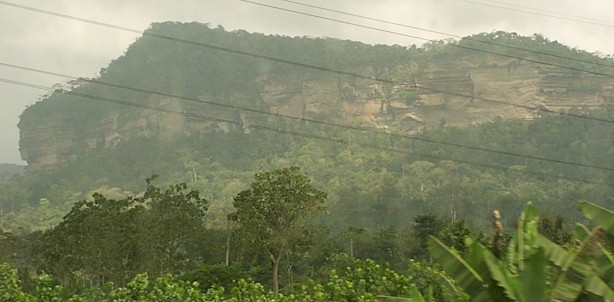
It's raining again today, and for some reason the trees here look better against grey skies than they do against the smoggy not-quite-blue we have been getting lately. But even when it is raining, its warm here, like a slightly damp hug from a long-lost friend.
Everything here is warm and welcoming. They told us before we left California that Ghana was very accepting and welcoming, that everyone here was nice. I couldnt believe it, because, really, HOW can an entire country be welcoming? When we landed there were signs everywhere saying "Alwaaba," welcome, and everyone who came to speak at our orientation said, "I would like to welcome you to Ghana." It got to be a little bit of a joke for a while, because everyone was a professor or some sort of authority figure. They couldnt possibly reflect the welcome of an entire country. Well, they do.
Ghana is the most warm, welcoming place, and with maybe one exception, everyone I have met in the month I have been here has welcomed me, and meant it. This is not an exaggeration. It gets a little weird when people introduce themselves and right away act like they have known you forever, but after you get used to it the feeling is so nice. Steve met a Ghanaian guy named Osman at legon Hall, where the boys live, and he started hanging out with us almost every night. He would walk with us to Bonjour, hike up the hill to Commonwealth Hall and Desperados, take a meal at the Bush Canteen, and all the time he talks, explaining Ghana, the people, the culture, the food (how you eat foufou: RIGHT HAND ONLY, scissor your first and second fingers together to cut off a piece. Use your thumb and three fingers to swirl it around in the soup/sauce, THEN you put it in your mouth and swallow, don't chew).
Last week Jon asked him what a woman meant when she had asked him to invite her to have some after she had sold him a bowl of rice. He didnt, of course, because he had just bought food, and it was his. But Osman told us that in Ghana, when you have something and someone else is with you you say, "You are invited." It doesnt mean that the person will take any, but that you have made the effort to include them in whatever it is that you have: food, clothing, notes, your space, anything. It is part of the general community care atmosphere that Ghana has. Family is really important here, and large extended families often live together. And even people who are not related call each other Brother or Sister, or Aunty or Uncle. There is an overall feeling of invitation, welcome, connection, that is missing in the united states. Maybe it has something to do with our obsession with posessions and individuality: this is my food, my personal space, my rights, my whatever. That tends to make people uncomfortable with the idea of sharing with strangers or near-strangers, maybe. hmmm... If America had a theme, it would probably be "Right to Individuality." Ghana's definitly is "You Are Invited." So all of you, including family, friends, Lyn , everyone, you are invited to my blog, to my experiences and adventures in this warm and welcoming place.
Thursday, August 30, 2007

School Report II: Dont Be Lazy, Do It Well
School here feels like a game. Not because I don't take it seriously, but because even when I and the other students take it very seriously, it is fun. Maybe because they put so much focus and energy into getting to university...who knows. But last night in the forty minute-long Russian history class I had, where the teacher discussed what the class was going to cover, how much the course packet would cost, and whether the time was going to change to acomodate fifteen students who had another class at the same time, he managed to sneak in a lecture to us about seriousness in school, especially in level 400. The professor told us that level 400 was hard, and that just because everyone got As and Bs in level 300, didnt mean they would here. By the end of his admonishment the whole class was laughing.
[side note: university here works in a similar way to our school in many ways, but with one exception. Freshmen come in at level 100, and can only take 100 classes. They move up in level as they move up in years, so level 400 is equivalent to college seniors. They have been here for a while, should know how to do the school thing, and have gotten good at cutting corners. Also, they all know each other because they have been taking classes together for four years. I tell people I am level 400 here, though technically I have finished my level 400]
And in addition to Russian/US comparative history, which actually looks really good, I am also taking Arabic. This might be considered insane by some, because I am also taking Twi, but I LOVE MY ARABIC CLASS. The lecturer is very good at balancing strict teaching methods with encouragement. When she walks around inspecting our handwriting (which ranges anywhere from artistic/poetic to chicken scratch/scribble, mine being somewhere in the middle) she says things like "Your dots...they are missing on this letter" and "Dont be lazy! Do it well" in a gently mocking yet supportive voice. Her comments to one student are broadcast to everyone via bad acoustic design of classrooms, and we all laugh and take another look at our work ("Am I doing it well? Any dots missing?"). The room is very small, and the class is very large, so we are squished in very close, practically on each other's laps. I was in between a guy and a girl who already have a little arabic, so their handwriting is very nice. I was trying to do as well as them, and the girl noticed and said to the guy in Ga that I was a very quick learner, that I must not have slept last night to have studied so well. The guy translated for me, we talked about languages that we each knew, etc. Then he started showing me Arabic numbers when we had a mini quiz to test the twenty letters we had already learned. He corrected mine and wrote "Good Job" in arabic, taught me how to say it, and showed me which letters it was. Really cool. The lecturer put all letters on the board, and the class said the sounds out loud as a group. When she asked for individual volunteers, gregarious me raised her hand a little, and my new friend grabbed it and said, "Obruni, obruni, obruni." The teacher laughed, chose me, and I did it almost perfectly for a silent class. When I was done they exploded like I had just scored a goal for Ghana, chanting "O-bru-ni" and clapping. The next guy who stood up got a cheer of "A BLACK MAN!" and did not nearly as well as me.
So I am an obruni, a white girl in a Ghanaian world, and I love it. I dont have the problem some of us are having, feeling guilty and embarassed to be white. I just am the way I am. I can no more change my skin color or the associations made with it than I can go back in time and stop the slave trade or colonial oppression. So my skin color and what it makes people think of me, they go in the box of things I can't change. How I treat people, what I tell them about myself and my country and how I feel about their country, those things all go in the box of things I can change. I have no white man's guilt because I am just Maureen, with all the attendant joys and sorrows and curiosity and fear that come with her. No more, and no less. I am here representing myself, my family, my school, my state, and my country (which sounds a lot like the 4-H pledge, now that I put it that way), and I can only do that by being myself. I won't be lazy. I will do it well, and maybe they will chant "Obruni" in their hearts when I leave, and look forward to seeing me again.
[side note: university here works in a similar way to our school in many ways, but with one exception. Freshmen come in at level 100, and can only take 100 classes. They move up in level as they move up in years, so level 400 is equivalent to college seniors. They have been here for a while, should know how to do the school thing, and have gotten good at cutting corners. Also, they all know each other because they have been taking classes together for four years. I tell people I am level 400 here, though technically I have finished my level 400]
And in addition to Russian/US comparative history, which actually looks really good, I am also taking Arabic. This might be considered insane by some, because I am also taking Twi, but I LOVE MY ARABIC CLASS. The lecturer is very good at balancing strict teaching methods with encouragement. When she walks around inspecting our handwriting (which ranges anywhere from artistic/poetic to chicken scratch/scribble, mine being somewhere in the middle) she says things like "Your dots...they are missing on this letter" and "Dont be lazy! Do it well" in a gently mocking yet supportive voice. Her comments to one student are broadcast to everyone via bad acoustic design of classrooms, and we all laugh and take another look at our work ("Am I doing it well? Any dots missing?"). The room is very small, and the class is very large, so we are squished in very close, practically on each other's laps. I was in between a guy and a girl who already have a little arabic, so their handwriting is very nice. I was trying to do as well as them, and the girl noticed and said to the guy in Ga that I was a very quick learner, that I must not have slept last night to have studied so well. The guy translated for me, we talked about languages that we each knew, etc. Then he started showing me Arabic numbers when we had a mini quiz to test the twenty letters we had already learned. He corrected mine and wrote "Good Job" in arabic, taught me how to say it, and showed me which letters it was. Really cool. The lecturer put all letters on the board, and the class said the sounds out loud as a group. When she asked for individual volunteers, gregarious me raised her hand a little, and my new friend grabbed it and said, "Obruni, obruni, obruni." The teacher laughed, chose me, and I did it almost perfectly for a silent class. When I was done they exploded like I had just scored a goal for Ghana, chanting "O-bru-ni" and clapping. The next guy who stood up got a cheer of "A BLACK MAN!" and did not nearly as well as me.
So I am an obruni, a white girl in a Ghanaian world, and I love it. I dont have the problem some of us are having, feeling guilty and embarassed to be white. I just am the way I am. I can no more change my skin color or the associations made with it than I can go back in time and stop the slave trade or colonial oppression. So my skin color and what it makes people think of me, they go in the box of things I can't change. How I treat people, what I tell them about myself and my country and how I feel about their country, those things all go in the box of things I can change. I have no white man's guilt because I am just Maureen, with all the attendant joys and sorrows and curiosity and fear that come with her. No more, and no less. I am here representing myself, my family, my school, my state, and my country (which sounds a lot like the 4-H pledge, now that I put it that way), and I can only do that by being myself. I won't be lazy. I will do it well, and maybe they will chant "Obruni" in their hearts when I leave, and look forward to seeing me again.
Tuesday, August 28, 2007
School Report, part 1
last year, when i took the crusades class, i decided that if i hadn't found African history i would be a medieval historian. its the religion thing (and by religion i mean Christianity, and especially catholicism). and i don't know why, but it makes me SO EXCITED to learn about it. The reformation class i am taking is really good. today we talked about transubstantiation, which i always thought was just the fact that bread and wine become body and blood. but its much more than that. let me see if i can say it without wrinkly frown lines...(warning! irreverent, silly, and maybe not quite right, also long dialog ahead)
it goes like this: Thomas Aquinas is chilling in the 12th centuryish, being the foremost philosopher of the catholic tradition, and some priestly dudes come up to him.
pd: Thomas Aquinas, we know that the bread and wine turn into body and blood. Jesus told us that, we have been preaching it since the second century, no problem. but, forgive us for our three year oldness, WHY does it happen? and how is it possible that to the untrained and unfaithful it still LOOKS and TASTES and FEELS like bread and not, um, human flesh?
TA: well, let me think. *puts on Tom waits, Gregorian chant style on his medieval radio, stokes the fire, stares at alter boys for inspiration, reads a manuscript or two and some Greek philosophy, gets drunk, and generally is a philosopher* GOT IT! Ok. Priest dudes, do you know Aristotle?
pd:isn't he that Greek guy who had the whole chain of being thing? with god at the top?
TA: yes, i think. he also had this idea of substance and accidents. Not car accidents, but something else. Umm, think about it this way. Look at this book *takes dusty tome off shelf* It looks like a book, right?
pd: yeah.
TA: and this other book, its also a book, right? *second, less dusty, slightly thicker book that actually has playboy tucked inside, but priest dudes don't know that*
pd: yes Thomas. (to each other: there must not be too much to this whole philosophy thing, if this is all he came up with)
TA: But they are different! What makes them both books if one is dusty red leather and the other is polished vellum?
pd: um...they just ARE both books?
TA: Exactly! There is something inherently BOOK about them despite their physical differences. There is an essence of BOOKNESS that is their SUBSTANCE. The surface discrepancies and characteristics, like covers, pages, dust, writing, are just ACCIDENTS of nature that we have come to associate with that inner bookness.
pd: and Aristotle said this? (damn that came out of left field...this philosophy thing must be harder than we thought, or else he is making this up...)
TA: you bet...you have no idea what a little goat meat and cheap wine will do to your brain. Anyway, to get back to the bread and wine thing. We know this is bread *holds out a loaf* because why?
pd: because it crumbles when it gets stale? it has a crust? the Muslims don't leaven it?
TA: all of those things are the ACCIDENTS that we associate with bread, and are separate from the inner breadness underneath. with me?
pd: um, yeah.
TA: what happens during the liturgy of the Eucharist?
pd 1: I Know this one, pick me! I say the magic words and god or the holy spirit turn the bread into the body of Christ
TA: very good! take a cookie. You say words, and god changes the bread to body. What god changes, though, is the SUBSTANCE, the underlying bread-ness of the bread. he changes that into body-ness. And he leaves the ACCIDENTS of bread, what we recognize as staleness, yeast, etc, god leaves them alone, so they stay the same even though underneath them its really human flesh. QED. now you are blocking my view of the alter boys..i mean alter. go play with your indulgences and corruption.
so anyway, i love that the catholic church felt the need to define and explain every aspect of faith. mostly because without that incredibly annoying, confusing, frustrating, and very off-putting characteristic of the church many fewer people would have had problems with it, and there might not have been a reformation. Maybe i am so excited by religion right now because i have no other classes that have actually started yet! GRRRR....i come here to take history classes, end up getting sidetracked by religion at every turn, and have to stand in line forever at the bank, on top of random spurts of loneliness that take me at odd moments and such intense euphoria that i am not sure i ever want to come home.
it goes like this: Thomas Aquinas is chilling in the 12th centuryish, being the foremost philosopher of the catholic tradition, and some priestly dudes come up to him.
pd: Thomas Aquinas, we know that the bread and wine turn into body and blood. Jesus told us that, we have been preaching it since the second century, no problem. but, forgive us for our three year oldness, WHY does it happen? and how is it possible that to the untrained and unfaithful it still LOOKS and TASTES and FEELS like bread and not, um, human flesh?
TA: well, let me think. *puts on Tom waits, Gregorian chant style on his medieval radio, stokes the fire, stares at alter boys for inspiration, reads a manuscript or two and some Greek philosophy, gets drunk, and generally is a philosopher* GOT IT! Ok. Priest dudes, do you know Aristotle?
pd:isn't he that Greek guy who had the whole chain of being thing? with god at the top?
TA: yes, i think. he also had this idea of substance and accidents. Not car accidents, but something else. Umm, think about it this way. Look at this book *takes dusty tome off shelf* It looks like a book, right?
pd: yeah.
TA: and this other book, its also a book, right? *second, less dusty, slightly thicker book that actually has playboy tucked inside, but priest dudes don't know that*
pd: yes Thomas. (to each other: there must not be too much to this whole philosophy thing, if this is all he came up with)
TA: But they are different! What makes them both books if one is dusty red leather and the other is polished vellum?
pd: um...they just ARE both books?
TA: Exactly! There is something inherently BOOK about them despite their physical differences. There is an essence of BOOKNESS that is their SUBSTANCE. The surface discrepancies and characteristics, like covers, pages, dust, writing, are just ACCIDENTS of nature that we have come to associate with that inner bookness.
pd: and Aristotle said this? (damn that came out of left field...this philosophy thing must be harder than we thought, or else he is making this up...)
TA: you bet...you have no idea what a little goat meat and cheap wine will do to your brain. Anyway, to get back to the bread and wine thing. We know this is bread *holds out a loaf* because why?
pd: because it crumbles when it gets stale? it has a crust? the Muslims don't leaven it?
TA: all of those things are the ACCIDENTS that we associate with bread, and are separate from the inner breadness underneath. with me?
pd: um, yeah.
TA: what happens during the liturgy of the Eucharist?
pd 1: I Know this one, pick me! I say the magic words and god or the holy spirit turn the bread into the body of Christ
TA: very good! take a cookie. You say words, and god changes the bread to body. What god changes, though, is the SUBSTANCE, the underlying bread-ness of the bread. he changes that into body-ness. And he leaves the ACCIDENTS of bread, what we recognize as staleness, yeast, etc, god leaves them alone, so they stay the same even though underneath them its really human flesh. QED. now you are blocking my view of the alter boys..i mean alter. go play with your indulgences and corruption.
so anyway, i love that the catholic church felt the need to define and explain every aspect of faith. mostly because without that incredibly annoying, confusing, frustrating, and very off-putting characteristic of the church many fewer people would have had problems with it, and there might not have been a reformation. Maybe i am so excited by religion right now because i have no other classes that have actually started yet! GRRRR....i come here to take history classes, end up getting sidetracked by religion at every turn, and have to stand in line forever at the bank, on top of random spurts of loneliness that take me at odd moments and such intense euphoria that i am not sure i ever want to come home.
Monday, August 27, 2007
Five Senses, Ghana Style
This is for Carrie [thank you SO MUCH for your letters, by the way], who wants to know the colors and smells and fashions of Ghana. Pictures are of kente cloth and haute coture, Ghana style.
Ghana is a very tactile place in many ways. People here hold hands all the time (guys with each other, girls with anyone) and embrace or touch a lot. And just the atmosphere, with its humidity and heat, feels like an embrace, albiet sometimes unwelcome. Most food is eaten with the thumb and three fingers of your right hand, and the Ghanaian handshake is a four-part affair with a mutual fingersnap at the end, very complicated to learn but awesome once you get it down.
Ghana tastes spicy. Most food is either bland calories or REALLy flavorful, mostly with peppers. Dishes are some base, like yams (white, steamed, cut into chunks), rice (plain or fried or jollof), fufu (plantian/cassava goo in a lump that you DO NOT chew, just break off pieces with your fingers [right hand only] and swallow down like oysters), kenke (fermented corn dough wrapped in banana leaves, also broken off and dipped with fingers), banku (lumps of white stuff that tastes like sourdough) or noodles. The base is then covered in some kind of 'gravy' sauce in the case of yams, rice, kenke or noodles, and soup for fufu and banku. The sauce is usually tomato based, with spices and tasty bits. Most tomato sauces have meat in them, either chicken, fish or 'meat,' which is everything from goat to beef to just-dont-ask. Sometimes, if you are lucky, there is a cabbage coleslaw kind of thing along with it all, but the veggies here are few and far between, and not so good to eat beause they are not washed well if at all and can make you very sick. So I buy tomatos and wash them at home, or I buy avocados, which are called pears over here, or pineapples, mangos, papayas, other fruit at any of the plentiful stands that are around. At the Bush Canteen, a market quarter on campus, I can get jollof rice and sauce for 30 peswas, which is $0.30. Meat is extra, but not much. A pineapple costs 50 peswas, as does a 'pear.' Any food that is 'American' is very expensive, and usually just as odd as the Ghanaian food is.
The landscape and visual stimulus are very different than California, or at least the Bay Area. There are paved roads, but they are crowded with taxis and trotros, big trucks, and a few old cars. The last time I went to Osu, I saw a Lincoln SUV, and it looked really out of place. What cars there are are European models, and at least five to ten years old. Lining the roads, as you leave Accra but are still in the urban area, are the most random assortment of goods on display for sale. Bed frames, freshly carved and stained, sit next to tropical vegegation, just hanging out and waiting for a new owner. And next door to those, sitting in the open, will be a row of cement columns, greek style, or little piles of flat stone to use in floors, or (used, almost bald) tires stacked up waiting for their next owners. There are no buildings or stalls, or any people in evidence, just stuff out there for sale. But the biggest part of the landscape is the red dirt. It makes everything that much brighter. Even my feet, when they get dirty, look exciting instead of dull brown.
And in terms of color, it is everywhere. People wear Traditional dress to be fancy (like the women to the right). Femal fashions are dresses or skirts and tops out of bright patterns, with the whole garment out of the same pattern, and they are very fitted. Men wear brightly colored shirts and slacks, or button-down european shirts, or, if they are older and not so urban, they wear a whole wad of fabric wrapped around and around, with the end draped over their left shoulder. Saturday is funeral day here, so if you leave Accra, everywhere everyone is wearing black, or black and red. Funerals are big parties, where the philosophy is to celebrate as much as possible. Many of us have been to funerals at villages or in Accra, and some girls got invited to a prince's house. They are big, public affairs, and one of the only places where Ghanaians really indulge in alcohol consumption. Even christians will have elaborate parties. On a day-to-day basis most women in the Legon/Accra area, especially at the University, where they are more affluent, dress very well, and usually in jeans or slacks, nice top or button-down shirt, and all the accessories. They spend a lot of time, money and energy putting themselves together very well, in brand name stuff too. Us obrunis are definitly underdressed most of the time, but that is taken as natural for us because we are different...most behaviors we exhibit are explained away through just plain weirdness.
Music is everywhere here. People sing all the time, play drums, talk and chatter, wake us up at five am with a sermon outside our windows (it happens every day to the boys at their dorm). And cars always use their horns for everything. When you walk past someone, chances are that they will hiss at you, which is just to get your attention so you will look at their wares. And if I trip on something, everyone who sees will chorus "Sorry!" in a very british/ghanaian manner to express their sympathy at my injury. English sounds different here, too. There is a thick accent layered on top of british diction and slang. And many of the students speak pidgin english, just because they can. There are bits and pieces of Twi and Ga and other akan languages around, and small-small (very little) bits of arabic, like when our friend Osman greeted some guys from his village with "Salaam." The more we hear and speak with Ghanaians, the more we pick these little bits of speech up. Thick accents dont bother me anymore, either. That is a big part of the acclimation process.
Things either smell really good here or really bad. There is no middle ground. Flowers and food always smell delicious, but good smells usually have to fight the bad ones, like open sewers at the markets, decomposing vegetables, or the tangible scent of 17 people waiting in line at the bank. I think my nose has gotten more work here in one month than it did each year back home.
Barbara Kingsolver wrote, in the Poisonwood Bible, that when Leah came back to the US with her family, her son thought his nose was broken because he couldnt smell anything, even in grocery stores surrounded by tons of food that SHOULD smell. There is no detachment or divide between me and my environment here. Everything is much more immediate, and more intense for it. This kind of constant sensory stimulation is tiring. I see, hear, feel more things in a day than I am used to, and beacuse they are all new and different, my brain has to process them all on the concious level, and it wears me out. Even just walking out of my hall, accross the street to the internet cafe, down to bush market, and back is a big adventure in terms of things seen and done, new experiences, people met, everything. And that doesnt even include classes, which I will have a whole section on once they actually start meeting. I just spent a few minutes trying to imagine coming from here to America as a Ghanaian, and it would be quite the cultural leap. I guess I have taken that same leap going the other way. Who knows where I will land?
Ghana is a very tactile place in many ways. People here hold hands all the time (guys with each other, girls with anyone) and embrace or touch a lot. And just the atmosphere, with its humidity and heat, feels like an embrace, albiet sometimes unwelcome. Most food is eaten with the thumb and three fingers of your right hand, and the Ghanaian handshake is a four-part affair with a mutual fingersnap at the end, very complicated to learn but awesome once you get it down.
Ghana tastes spicy. Most food is either bland calories or REALLy flavorful, mostly with peppers. Dishes are some base, like yams (white, steamed, cut into chunks), rice (plain or fried or jollof), fufu (plantian/cassava goo in a lump that you DO NOT chew, just break off pieces with your fingers [right hand only] and swallow down like oysters), kenke (fermented corn dough wrapped in banana leaves, also broken off and dipped with fingers), banku (lumps of white stuff that tastes like sourdough) or noodles. The base is then covered in some kind of 'gravy' sauce in the case of yams, rice, kenke or noodles, and soup for fufu and banku. The sauce is usually tomato based, with spices and tasty bits. Most tomato sauces have meat in them, either chicken, fish or 'meat,' which is everything from goat to beef to just-dont-ask. Sometimes, if you are lucky, there is a cabbage coleslaw kind of thing along with it all, but the veggies here are few and far between, and not so good to eat beause they are not washed well if at all and can make you very sick. So I buy tomatos and wash them at home, or I buy avocados, which are called pears over here, or pineapples, mangos, papayas, other fruit at any of the plentiful stands that are around. At the Bush Canteen, a market quarter on campus, I can get jollof rice and sauce for 30 peswas, which is $0.30. Meat is extra, but not much. A pineapple costs 50 peswas, as does a 'pear.' Any food that is 'American' is very expensive, and usually just as odd as the Ghanaian food is.
The landscape and visual stimulus are very different than California, or at least the Bay Area. There are paved roads, but they are crowded with taxis and trotros, big trucks, and a few old cars. The last time I went to Osu, I saw a Lincoln SUV, and it looked really out of place. What cars there are are European models, and at least five to ten years old. Lining the roads, as you leave Accra but are still in the urban area, are the most random assortment of goods on display for sale. Bed frames, freshly carved and stained, sit next to tropical vegegation, just hanging out and waiting for a new owner. And next door to those, sitting in the open, will be a row of cement columns, greek style, or little piles of flat stone to use in floors, or (used, almost bald) tires stacked up waiting for their next owners. There are no buildings or stalls, or any people in evidence, just stuff out there for sale. But the biggest part of the landscape is the red dirt. It makes everything that much brighter. Even my feet, when they get dirty, look exciting instead of dull brown.
And in terms of color, it is everywhere. People wear Traditional dress to be fancy (like the women to the right). Femal fashions are dresses or skirts and tops out of bright patterns, with the whole garment out of the same pattern, and they are very fitted. Men wear brightly colored shirts and slacks, or button-down european shirts, or, if they are older and not so urban, they wear a whole wad of fabric wrapped around and around, with the end draped over their left shoulder. Saturday is funeral day here, so if you leave Accra, everywhere everyone is wearing black, or black and red. Funerals are big parties, where the philosophy is to celebrate as much as possible. Many of us have been to funerals at villages or in Accra, and some girls got invited to a prince's house. They are big, public affairs, and one of the only places where Ghanaians really indulge in alcohol consumption. Even christians will have elaborate parties. On a day-to-day basis most women in the Legon/Accra area, especially at the University, where they are more affluent, dress very well, and usually in jeans or slacks, nice top or button-down shirt, and all the accessories. They spend a lot of time, money and energy putting themselves together very well, in brand name stuff too. Us obrunis are definitly underdressed most of the time, but that is taken as natural for us because we are different...most behaviors we exhibit are explained away through just plain weirdness.
Music is everywhere here. People sing all the time, play drums, talk and chatter, wake us up at five am with a sermon outside our windows (it happens every day to the boys at their dorm). And cars always use their horns for everything. When you walk past someone, chances are that they will hiss at you, which is just to get your attention so you will look at their wares. And if I trip on something, everyone who sees will chorus "Sorry!" in a very british/ghanaian manner to express their sympathy at my injury. English sounds different here, too. There is a thick accent layered on top of british diction and slang. And many of the students speak pidgin english, just because they can. There are bits and pieces of Twi and Ga and other akan languages around, and small-small (very little) bits of arabic, like when our friend Osman greeted some guys from his village with "Salaam." The more we hear and speak with Ghanaians, the more we pick these little bits of speech up. Thick accents dont bother me anymore, either. That is a big part of the acclimation process.
Things either smell really good here or really bad. There is no middle ground. Flowers and food always smell delicious, but good smells usually have to fight the bad ones, like open sewers at the markets, decomposing vegetables, or the tangible scent of 17 people waiting in line at the bank. I think my nose has gotten more work here in one month than it did each year back home.
Barbara Kingsolver wrote, in the Poisonwood Bible, that when Leah came back to the US with her family, her son thought his nose was broken because he couldnt smell anything, even in grocery stores surrounded by tons of food that SHOULD smell. There is no detachment or divide between me and my environment here. Everything is much more immediate, and more intense for it. This kind of constant sensory stimulation is tiring. I see, hear, feel more things in a day than I am used to, and beacuse they are all new and different, my brain has to process them all on the concious level, and it wears me out. Even just walking out of my hall, accross the street to the internet cafe, down to bush market, and back is a big adventure in terms of things seen and done, new experiences, people met, everything. And that doesnt even include classes, which I will have a whole section on once they actually start meeting. I just spent a few minutes trying to imagine coming from here to America as a Ghanaian, and it would be quite the cultural leap. I guess I have taken that same leap going the other way. Who knows where I will land?
Thursday, August 23, 2007
Why Love Africa in three scenes (warning, longest post known to man)
My life got exponentially better on tuesday. Ask me why.
"Maureen, darling, wonderful person, what about tuesday made your life so fantastic after it was really not for so long?"
"Well, since you asked so nicely, I guess I will tell you. Sit down, cause this story is a bit of a doozy by the time you get to the puch line..."
"I AM sitting...hello, COMPUTER! Just tell me already!"
"Fine fine fine...here goes:
The scene: University of Ghana, Legon, etc, on the first really rainy day since the day we landed (so, pretty much like swimming through a wet blanket to breathe) and the second day of actual class, which means that NO ONE is here yet, and most classes are not meeting. our fair heroine (thats me) has her religious studies class today, but before that she needs to go to the bank to see if her $ transfer from California has finallly come through. And this evening there is some conference thinger that she might miss if her class actually meets, but she doesnt know what it is, so no big deal. So she goes to the bank.
Scene One: crowded bank at the university, with about 20000 people trying to get their new account numbers, which come from a very harrassed lady who looks them up online from your name and scribbles them on bits of paper. NOT your most high-tech experience ever. And because it is so humid outside, the AC units in the bank are pulling overtime to make sure that your average popsicle will remain frozen in the bank. I stand in the mob of people waving bits of paper, waving my own bit of paper (a withdrawl slip that didnt work yesterday, so has been bumming around in the bottom of my bag for 24 hours, and has gotten mashed against sunglasses, notebook, and waterbottle for that time, and looks worse for wear) and, being an obruni, i catch the eye of the woman behind the desk after only 25 minutes of mobbing. She takes my paper and my id card, answers the phone, wages war on.Nigeria, helps six black people, and only when natural disasters have been averted does she look at my paper blankly and ask me what it is i want, So I tell her, she ticks some keys, scrawls something on the top of that poor abused withdrawl slip, and sends me to qeue one, which is foreign transactions, and the scene of the previous day's bank drama. I stand in line for another century, this time with no mobbing because everyone in line is not from ghana and consequently knows how to stand in line like preschoolers do, instead of like ghanaians, and i wait. and i wait. and when i get to the window i hand over that slip of paper, and after an eternity, they ACTUALLY GIVE ME MONEY!!!!! I fight my way out of the (freezing) bank and into the wet blanket rain, a grin of triumph on my face! Hurrah! I can eat today! Victory. I go home to feed the cat and my face and take a quick nap before scene two.
Scene Two: the street outside the university bookstore, where someone told me there were stairs to the room in which my class will be held. I find them, walk up them, and lo and behold, there is a classroom. And actual students. So far, so good. The chances of there acutally being class have just increased exponentially. This is religious studies, a class on the reformation ( i couldnt remember what that was excactly when I signed up for the class, but i knew i loved it, and i would like the class. sitting in the room i remember something about martin luther and suddenly it all comes back: baroque archetecture, the counter reformation, calvin and his brilliant plan, the idea of faith vs works, the whole shebang..its gonna be a good class) There is a religious studies club (a la the history club from santa cruz) already in session sitting front row center laughing and joking about life. These people look as cool as ilia and i did last year, only dressed WAY better. and i am a little jealous. so we sit, people trickle in, i am the only obruni, more people come in, and then this white guy kinda rolls in the door like a little santa clause dressed in african clothes. My first thought is 'A white guy? Whats he doing here?' Turns out he is the anglican pastor cum professor who is going to be teaching the class. Not only is the room where it is supposed to be, and there are students, but there is now a teacher. Unprecedented on the first week of class. AND, surprise of surprises, he has AN ACUTAL SYLLABUS, Be still my heart! He passes it out, talks, nominates a class captain, talks, asks us what we think history is and whether the bible qualifies as a historical document. I volunteer something, and generally stop feeling so behnd, out of place, etc, and realize (like I do every semster) that yes, i really do belong in academics, i love it and i am really good at it, even translated across half an ocean and into a whole sea of not-what-im-used-to. class is short, only half an hour, which means that i have time, if i run, to get to scene three.
Scene Three: parking lot outside of volta hall in the drizzle. I come running up in my jeans and tshirt, with my bag over my shoulder, hoping i didnt miss the bus to whatever conference thing we are going to. A group of girls from the program are there, in heels and dresses and dressed nice, ready to go. I feel underdressed, more people show up dressed well, i feel even more underdressed, and finally run up to the room to change. I come down in 32 seconds, a world record for feminine primping, even for me, and of course the bus still isnt there. the guys have showed up, though, all dressed nice and asking each other if they think this thing will be over in time to watch the football match between ghana and senegal later in the evening. I still dont know what the event is. we bus it to the convention center, possibly the swankiest building in all of west africa (they have SOAP AND TOILET PAPER in the restroom. Mary said she dressed up just for that), and go through to a big conference room that is air conditioned like antarctica to make up for the steaming rain. all of us sit in the back and start playing with the UN style mics that are set up at each set of two seats, like in congress or whatever...you know, with the button to push and say "Mr Speaker, I respectfully disagree blahblahhblah." some people are doing newscasts reading the powerpoint presentation that is ready to be given on the screen, and others are just messing around. Distinguished Individuals start entering and taking seats up in the front, and we all move down to fill in the space. The presentation starts, and it turns out that this is the inagural lecture of this thing called the International Institute for Advanced Studies of culture, economy, etc. and the MC introduces the man who makes the opening remarks, who introduces the man who makes the welcoming remarks, who introduces someone else, who introduces about half the people in the audience before introducing the chairman, who introduces the lecturer, a guy named Emmanuel Akyeampong who is ghanain but teaches history at harvard, and is giving a lecture on transnationalism and the diaspora, the slave trade, something, and something else. In other words, right up my alley. So i sit and listen, laugh dutifully at all the corny history jokes, sit up straighter when he mentions John Thornton, Michael Gomez, and about a dozen other historians that i have read and used in papers, and generally enjoy myself a whole lot. Then there are responding remarks, intro to closing remarks, pentultimate thanks remarks, closing remarks, more history jokes, and finally the MC announces the stuff most of the boys came for: refreshments, including finger food and free beer. everyone moves to the hallway and stands around eating ghanaian munchies, drinking beer and soda (which is called minerals here, btw) and generally either schmoozing or wanting to schmooze or talking akwardly. I really want to go up to the lecturer and talk to him, or at least say hi, because HARVARD, and besides i actually knew what he was talking about and loved the lecutre. Finally i get my courage up, drift closer, smile, and shake his hand. Our conversation goes like this:
me: Hi. I really liked your lecture.
him: thank you very much (polite smile and his undivided attention!)
m: i just finished my senior year studying african history at UC Santa Cruz...
(h: UC, huh?)
and I am at teh university of ghana for a year. I am looking at grad schools when i get back to the states.
h: where are you looking?
m: boston, wisconsin, UCLA
h: and are you looking at harvard?
m: i might be looking at harvard. I saw michael gomez speak at santa cruz, and now I have seen you, and i might just look at harvard.
h: I would be very disapointed if you didnt. The director of your program has my contact info and i am in town until the 13th of september. we should meet before i leave and talk about this more.
m: i would love to. I will definitly do that. thank you (manages not to be too obsequious)
end scene three."
so pretty much my lifeis amazing. i am definitly an academic, i have a place in the international history community like i wanted when i came here, and i might go to HARVARD for grad school. I am meeting him again in a couple of hours to talk, and it turns out that he is one three professors who do the phd program there in african history, and he is kinda a big guy in the feild, just a bit. i pretty much went from sulking so sailing in 2.5 seconds.
"Maureen, darling, wonderful person, what about tuesday made your life so fantastic after it was really not for so long?"
"Well, since you asked so nicely, I guess I will tell you. Sit down, cause this story is a bit of a doozy by the time you get to the puch line..."
"I AM sitting...hello, COMPUTER! Just tell me already!"
"Fine fine fine...here goes:
The scene: University of Ghana, Legon, etc, on the first really rainy day since the day we landed (so, pretty much like swimming through a wet blanket to breathe) and the second day of actual class, which means that NO ONE is here yet, and most classes are not meeting. our fair heroine (thats me) has her religious studies class today, but before that she needs to go to the bank to see if her $ transfer from California has finallly come through. And this evening there is some conference thinger that she might miss if her class actually meets, but she doesnt know what it is, so no big deal. So she goes to the bank.
Scene One: crowded bank at the university, with about 20000 people trying to get their new account numbers, which come from a very harrassed lady who looks them up online from your name and scribbles them on bits of paper. NOT your most high-tech experience ever. And because it is so humid outside, the AC units in the bank are pulling overtime to make sure that your average popsicle will remain frozen in the bank. I stand in the mob of people waving bits of paper, waving my own bit of paper (a withdrawl slip that didnt work yesterday, so has been bumming around in the bottom of my bag for 24 hours, and has gotten mashed against sunglasses, notebook, and waterbottle for that time, and looks worse for wear) and, being an obruni, i catch the eye of the woman behind the desk after only 25 minutes of mobbing. She takes my paper and my id card, answers the phone, wages war on.Nigeria, helps six black people, and only when natural disasters have been averted does she look at my paper blankly and ask me what it is i want, So I tell her, she ticks some keys, scrawls something on the top of that poor abused withdrawl slip, and sends me to qeue one, which is foreign transactions, and the scene of the previous day's bank drama. I stand in line for another century, this time with no mobbing because everyone in line is not from ghana and consequently knows how to stand in line like preschoolers do, instead of like ghanaians, and i wait. and i wait. and when i get to the window i hand over that slip of paper, and after an eternity, they ACTUALLY GIVE ME MONEY!!!!! I fight my way out of the (freezing) bank and into the wet blanket rain, a grin of triumph on my face! Hurrah! I can eat today! Victory. I go home to feed the cat and my face and take a quick nap before scene two.
Scene Two: the street outside the university bookstore, where someone told me there were stairs to the room in which my class will be held. I find them, walk up them, and lo and behold, there is a classroom. And actual students. So far, so good. The chances of there acutally being class have just increased exponentially. This is religious studies, a class on the reformation ( i couldnt remember what that was excactly when I signed up for the class, but i knew i loved it, and i would like the class. sitting in the room i remember something about martin luther and suddenly it all comes back: baroque archetecture, the counter reformation, calvin and his brilliant plan, the idea of faith vs works, the whole shebang..its gonna be a good class) There is a religious studies club (a la the history club from santa cruz) already in session sitting front row center laughing and joking about life. These people look as cool as ilia and i did last year, only dressed WAY better. and i am a little jealous. so we sit, people trickle in, i am the only obruni, more people come in, and then this white guy kinda rolls in the door like a little santa clause dressed in african clothes. My first thought is 'A white guy? Whats he doing here?' Turns out he is the anglican pastor cum professor who is going to be teaching the class. Not only is the room where it is supposed to be, and there are students, but there is now a teacher. Unprecedented on the first week of class. AND, surprise of surprises, he has AN ACUTAL SYLLABUS, Be still my heart! He passes it out, talks, nominates a class captain, talks, asks us what we think history is and whether the bible qualifies as a historical document. I volunteer something, and generally stop feeling so behnd, out of place, etc, and realize (like I do every semster) that yes, i really do belong in academics, i love it and i am really good at it, even translated across half an ocean and into a whole sea of not-what-im-used-to. class is short, only half an hour, which means that i have time, if i run, to get to scene three.
Scene Three: parking lot outside of volta hall in the drizzle. I come running up in my jeans and tshirt, with my bag over my shoulder, hoping i didnt miss the bus to whatever conference thing we are going to. A group of girls from the program are there, in heels and dresses and dressed nice, ready to go. I feel underdressed, more people show up dressed well, i feel even more underdressed, and finally run up to the room to change. I come down in 32 seconds, a world record for feminine primping, even for me, and of course the bus still isnt there. the guys have showed up, though, all dressed nice and asking each other if they think this thing will be over in time to watch the football match between ghana and senegal later in the evening. I still dont know what the event is. we bus it to the convention center, possibly the swankiest building in all of west africa (they have SOAP AND TOILET PAPER in the restroom. Mary said she dressed up just for that), and go through to a big conference room that is air conditioned like antarctica to make up for the steaming rain. all of us sit in the back and start playing with the UN style mics that are set up at each set of two seats, like in congress or whatever...you know, with the button to push and say "Mr Speaker, I respectfully disagree blahblahhblah." some people are doing newscasts reading the powerpoint presentation that is ready to be given on the screen, and others are just messing around. Distinguished Individuals start entering and taking seats up in the front, and we all move down to fill in the space. The presentation starts, and it turns out that this is the inagural lecture of this thing called the International Institute for Advanced Studies of culture, economy, etc. and the MC introduces the man who makes the opening remarks, who introduces the man who makes the welcoming remarks, who introduces someone else, who introduces about half the people in the audience before introducing the chairman, who introduces the lecturer, a guy named Emmanuel Akyeampong who is ghanain but teaches history at harvard, and is giving a lecture on transnationalism and the diaspora, the slave trade, something, and something else. In other words, right up my alley. So i sit and listen, laugh dutifully at all the corny history jokes, sit up straighter when he mentions John Thornton, Michael Gomez, and about a dozen other historians that i have read and used in papers, and generally enjoy myself a whole lot. Then there are responding remarks, intro to closing remarks, pentultimate thanks remarks, closing remarks, more history jokes, and finally the MC announces the stuff most of the boys came for: refreshments, including finger food and free beer. everyone moves to the hallway and stands around eating ghanaian munchies, drinking beer and soda (which is called minerals here, btw) and generally either schmoozing or wanting to schmooze or talking akwardly. I really want to go up to the lecturer and talk to him, or at least say hi, because HARVARD, and besides i actually knew what he was talking about and loved the lecutre. Finally i get my courage up, drift closer, smile, and shake his hand. Our conversation goes like this:
me: Hi. I really liked your lecture.
him: thank you very much (polite smile and his undivided attention!)
m: i just finished my senior year studying african history at UC Santa Cruz...
(h: UC, huh?)
and I am at teh university of ghana for a year. I am looking at grad schools when i get back to the states.
h: where are you looking?
m: boston, wisconsin, UCLA
h: and are you looking at harvard?
m: i might be looking at harvard. I saw michael gomez speak at santa cruz, and now I have seen you, and i might just look at harvard.
h: I would be very disapointed if you didnt. The director of your program has my contact info and i am in town until the 13th of september. we should meet before i leave and talk about this more.
m: i would love to. I will definitly do that. thank you (manages not to be too obsequious)
end scene three."
so pretty much my lifeis amazing. i am definitly an academic, i have a place in the international history community like i wanted when i came here, and i might go to HARVARD for grad school. I am meeting him again in a couple of hours to talk, and it turns out that he is one three professors who do the phd program there in african history, and he is kinda a big guy in the feild, just a bit. i pretty much went from sulking so sailing in 2.5 seconds.
Friday, August 17, 2007
A Stranger Among Us
You know that feeling you get, when you meet someone, and you just KNOW that they are going to be important in your life? Well, I have had that feeling. The other night we (myself, Mikaela, Elias, Steve, Big Papa Ben, and Osmund) were walking back from Chicken Inn. We were on the path behind Akwafo Hall and the track area, almost to Legon, when Elias (lagging behind, smelling roses, and generally doing Elias things) stopped dead and made this little noise. We all came back to look, and guess what we saw in the gutter? Not a huge frog the size of my fist (that was earlier in the evening) or a cicada (also been there), but a little KITTEN! That's right, a kitten. With a tiny tail and big eyes. Mikaela picked it up and I said, "I wonder if we could keep it?" Now, two days later, we have a little ball of fluff living in our room, sleeping in the bottom drawer of Mikaela's desk, and doing her level best to wrap the entire population of EAP kids around her little finger. She is just about there. In honor of Eilas finding her, we christened her Ellie Mae. She is six weeks old, and she looks like a lynx, and she eats CONSTANTLY unless she is sleeping. Seriously cute. Paul is taking us to the vet on Monday to get her shots and all that health stuff, and she is going to live in our room and our balcony. Mikaela is thinking about bringing her back to the states at the end of the semester, which would probably be the best thing for her. Aparently it is totally ok to keep animals in your dorm room as long as you are discreet about it, and as long as they are not 'outside' animals, as Paul said (eg, monkeys). [Paul is one of the student guides who was assigned to help us transition to living here, and he is a wealth of insights into Ghanaian culture]. He was telling us that most Ghanaians dont like cats, though. He keeps them at his house in Kumasi, but that is pretty rare. He was also laughing at us because we kept calling her 'she' and gave her a name. Here, they just call their cats Cat or Kitty or Pussy, not any sort of name. And when I mentioned getting her spayed he just looked at me. Guess that isnt going to happen.
So. We have a cat. I am also registered for classes and I have turned in my special study proposal form. All in all, a productive week. Tomorrow is the orientation for all international students, which is very similar to the orientation we already went through, but in one day instead of two weeks. But hey, they are feeding us, so its not a total loss.
There will be more adventure stories when I have more adventures, which will be soon, as school starts for real on Monday.
So. We have a cat. I am also registered for classes and I have turned in my special study proposal form. All in all, a productive week. Tomorrow is the orientation for all international students, which is very similar to the orientation we already went through, but in one day instead of two weeks. But hey, they are feeding us, so its not a total loss.
There will be more adventure stories when I have more adventures, which will be soon, as school starts for real on Monday.
Monday, August 13, 2007
Crow's Vest, completed
Crow flew, high and high, up into the sky, fuming and ranting about his thoughtless roommates. He didn't understand how some Animal could have such a problem with him and not tell him about it until the whole situation was so out of hand, and then make the whole thing his fault, as if he was supposed to read their minds or something. It didn't make sense.
The higher he flew, the colder it became, and the more exhausted he grew. Just as he thought he could not continue, he spotted a fluffy white cloud looking so inviting. He sank into it with a sigh and looked down at the ground so far below, just a camel-colored blur dotted with dark spots. He missed it already, but there was no way he was going home, beak to the ground and tail tucked, to beg forgiveness. If they wanted him back, Snake and Monkey and Elephant would find a way to get him back. And until then he would rest, and watch, and talk as much as he wanted.
After his initial astonishment wore off, Snake slithered back down to the lowest branch of the tree to report to Monkey and Elephant.
"He's gone. I told him to be quiet, and he just took off into the sun. He dropped a feather on the way up, but that's all. He's gone."
"And a good thing, too!" Elephant said, "I couldn't sleep with all his clacking and cawing about every little thing."
"Like you are any better!" Monkey exclaimed, "And you sleep day and night, so everything interrupts your naps. Lazy!"
"At least I am not slovenly, like some I could name," Elephant retorted, pointing his trunk at Monkey and scowling.
They continued the argument in escalating voices, despite Snake's attempts to quiet them, and eventually they drew Lioness over, who was not pleased at the interruption of her nap. She gleaned from Snake what the problem was, and cuffed the two apart before saying, very quietly, "You will get along and work out your differences in a timely and considerate manner or I will personally see you both living with Warthog by the end of the afternoon. Any questions?"
Monkey hung his head and mumbled something about very sorry and Elephant sighed and apologized, if gracelessly, to everyone.
"That's better. Now, where is Crow?" she asked.
Even Snake blushed at that. "He was getting really noisy. It got to the point where we couldn't sleep or anything, so I went up to tell him to be quiet, but he took it wrong and he just left," he said, certain of the wrath soon to fall on him.
"He left." It was not a question, and Lioness was obviously not pleased. "He LEFT and you didnt feel it important enough to tell me? I brought everyone here so that I could watch over you all, and the three of you manage to not only be the first to start bickering, but also to chase away one of your number? Tell me why I should not drown you in the watering hole this instant?"
"Because we would pollute the water for all other Animals?" Monkey suggested.
Lioness took a deep breath, let it out, and said, in her quiet voice, "Get him back, and learn to live together, PLEASE, or I will move you all to places miserable beyond your belief. You are supposed to take care of each other, not alienate each other. Figure out how to bring him back and make it happen. And do please try to get along when he returns, for all of us."
She left the three of them, dumbfounded and a little shamed, holding Crow's left over feather and looking at each other.
"Elephant, you could throw me up into the air, and I could try to follow him," Snake suggested.
Monkey snorted. "Not a smart idea. What would Lioness say if she knew we tried something like that, even if you didnt die?"
"You're right. What could we do?"
"Well," Elephant said, tenatively, "Since none of us are birds, why don't we ask Egret or Dove for help? They could find Crow, and tell him we are sorry and we want to talk, and give him the feather back as a peace offering. When he gets down, we just ask him nicely to not chatter so much at night, and maybe on Sundays."
This plan met with aproval from everyone, and Dove was soon persuaded to be their ambassador of peace. She took the feather delicately in her beak and set off, aiming for a large cloud that looked promising.
Crow sat on his cloud, lonely, staring at the savana far below. He watched with interest as a little speck slowly grew bigger, and exclaimed in joy and surprise when he recognized Dove.
"What are you doing here?" he asked her, flapping in excitement.
"I came on behalf of your former roommates, who are very sorry for their harsh words, and beg you to at least come down and listen to their apology in person." She smiled as she spoke.
"I bet Lioness was angry when she discovered I had gone, wasnt she?" Dove just smiled again, and proffered the feather of peace. Crow shrugged and agreed, bringing a little bit of cloud with him to keep him warm on the flight down.
He landed gracefully on the ground in front of Elephant, and clacked his beak shut, waiting for their reactions. Elephant almost looked releived to see him, and Snake and Monkey's faces actually lit up. 'They do care about me...' Crow thoght, and in that moment he forgave them, provided they found a better way to address their grievances in the future.
"Crow, look, we are really sorry," Snake began, but was cut off before he could go any further.
Elephant went down on one knee and said solemly, "We ask for your forgiveness, Crow, and would like you to please come live with us again. We all have irritating faults, and we will do our best to control ours if you keep your cawing to a minimum at night. Will you please come back?" This unprecedented humility and grace from Elephant, and his reasonable proposal, were more than Crow was expecting, and he agreed, to relief all around. Monkey had the audacity to ask if Crow could maybe take SUndays off too, and everyone laughed. Crow settled back in at the top of the tree and life returned to normal. Everyone bickered and left their stuff around, but a quiet word was enough to amend that. Crow took the little bit of cloud he had kept and pressed it to his breast, a constant reminder that he had somewhere to go if he ever needed to leave. He never did.
The End
The higher he flew, the colder it became, and the more exhausted he grew. Just as he thought he could not continue, he spotted a fluffy white cloud looking so inviting. He sank into it with a sigh and looked down at the ground so far below, just a camel-colored blur dotted with dark spots. He missed it already, but there was no way he was going home, beak to the ground and tail tucked, to beg forgiveness. If they wanted him back, Snake and Monkey and Elephant would find a way to get him back. And until then he would rest, and watch, and talk as much as he wanted.
After his initial astonishment wore off, Snake slithered back down to the lowest branch of the tree to report to Monkey and Elephant.
"He's gone. I told him to be quiet, and he just took off into the sun. He dropped a feather on the way up, but that's all. He's gone."
"And a good thing, too!" Elephant said, "I couldn't sleep with all his clacking and cawing about every little thing."
"Like you are any better!" Monkey exclaimed, "And you sleep day and night, so everything interrupts your naps. Lazy!"
"At least I am not slovenly, like some I could name," Elephant retorted, pointing his trunk at Monkey and scowling.
They continued the argument in escalating voices, despite Snake's attempts to quiet them, and eventually they drew Lioness over, who was not pleased at the interruption of her nap. She gleaned from Snake what the problem was, and cuffed the two apart before saying, very quietly, "You will get along and work out your differences in a timely and considerate manner or I will personally see you both living with Warthog by the end of the afternoon. Any questions?"
Monkey hung his head and mumbled something about very sorry and Elephant sighed and apologized, if gracelessly, to everyone.
"That's better. Now, where is Crow?" she asked.
Even Snake blushed at that. "He was getting really noisy. It got to the point where we couldn't sleep or anything, so I went up to tell him to be quiet, but he took it wrong and he just left," he said, certain of the wrath soon to fall on him.
"He left." It was not a question, and Lioness was obviously not pleased. "He LEFT and you didnt feel it important enough to tell me? I brought everyone here so that I could watch over you all, and the three of you manage to not only be the first to start bickering, but also to chase away one of your number? Tell me why I should not drown you in the watering hole this instant?"
"Because we would pollute the water for all other Animals?" Monkey suggested.
Lioness took a deep breath, let it out, and said, in her quiet voice, "Get him back, and learn to live together, PLEASE, or I will move you all to places miserable beyond your belief. You are supposed to take care of each other, not alienate each other. Figure out how to bring him back and make it happen. And do please try to get along when he returns, for all of us."
She left the three of them, dumbfounded and a little shamed, holding Crow's left over feather and looking at each other.
"Elephant, you could throw me up into the air, and I could try to follow him," Snake suggested.
Monkey snorted. "Not a smart idea. What would Lioness say if she knew we tried something like that, even if you didnt die?"
"You're right. What could we do?"
"Well," Elephant said, tenatively, "Since none of us are birds, why don't we ask Egret or Dove for help? They could find Crow, and tell him we are sorry and we want to talk, and give him the feather back as a peace offering. When he gets down, we just ask him nicely to not chatter so much at night, and maybe on Sundays."
This plan met with aproval from everyone, and Dove was soon persuaded to be their ambassador of peace. She took the feather delicately in her beak and set off, aiming for a large cloud that looked promising.
Crow sat on his cloud, lonely, staring at the savana far below. He watched with interest as a little speck slowly grew bigger, and exclaimed in joy and surprise when he recognized Dove.
"What are you doing here?" he asked her, flapping in excitement.
"I came on behalf of your former roommates, who are very sorry for their harsh words, and beg you to at least come down and listen to their apology in person." She smiled as she spoke.
"I bet Lioness was angry when she discovered I had gone, wasnt she?" Dove just smiled again, and proffered the feather of peace. Crow shrugged and agreed, bringing a little bit of cloud with him to keep him warm on the flight down.
He landed gracefully on the ground in front of Elephant, and clacked his beak shut, waiting for their reactions. Elephant almost looked releived to see him, and Snake and Monkey's faces actually lit up. 'They do care about me...' Crow thoght, and in that moment he forgave them, provided they found a better way to address their grievances in the future.
"Crow, look, we are really sorry," Snake began, but was cut off before he could go any further.
Elephant went down on one knee and said solemly, "We ask for your forgiveness, Crow, and would like you to please come live with us again. We all have irritating faults, and we will do our best to control ours if you keep your cawing to a minimum at night. Will you please come back?" This unprecedented humility and grace from Elephant, and his reasonable proposal, were more than Crow was expecting, and he agreed, to relief all around. Monkey had the audacity to ask if Crow could maybe take SUndays off too, and everyone laughed. Crow settled back in at the top of the tree and life returned to normal. Everyone bickered and left their stuff around, but a quiet word was enough to amend that. Crow took the little bit of cloud he had kept and pressed it to his breast, a constant reminder that he had somewhere to go if he ever needed to leave. He never did.
The End
Saturday, August 11, 2007
Crow's Vest, continued
Monkey and snake settled down to sleep when the sun went down, and the world turned. Night Animals came out to hunt, slumbering animals snored, the stars winked coyly from behind the clouds, and life progressed as it should.
Time went on, and over the next few weeks the roommates lost their original careful way of acting around each other. Their bad habits appeared, the last things unpacked. Monkey, prone to fits of frustration, threw his banana peels around everywhere. Snake left his shed skins on the tree branches, and scared Monkey and Crow, who thought they were ghosts. Elephant, down below the tree, got irritated at the littlest thing and complained loudly about everything. But the other Animals agreed that Crow had the most grating habit of all. He would sit up in the top of the tree all day long, making comments about everything he saw. If the breeze blew the grass, it was cause for announcement. If the sun rose in the morning or the moon came out at night, he sent out a loud call. If anything happened that he thought was interesting or amazing or even boring he had to share it with everyone else. For a little while it was interesting to listen to him. But after two weeks even Snake, who had the most patience of all of them, was getting irritated. Elephant, Snake, and Monkey met one afternoon at the bottom of the tree and came to a decision: they sent Snake up to the top branch to have a talk with Crow.
"Hey, Snake, how has your day been? Did you see the heard of gazelles earlier? They sure stirred up a dust cloud, didn't they? I bet the watering hole is pretty crowded right now. What do you think the weather is going to be like next week? I hope it rains. I have so much dust in my feathers and..."
"Crow, hi, its good to see you too. My day has been interesting, and that is part of the reason I am up here. We met just now, Elephant, Monkey, and I, and we came to a decision. Your constant chatter gets on everyone's nerves. It bothers us a lot. We need you to be quiet, or you are going to have to leave. We mean it. No one can sleep, Elephant complains all the time, and Monkey has been gritting his teeth every time you open your mouth for the last week to keep from yelling at you. Please, just keep your beak shut, ok?"
Crow's beak clacked shut, and he just looked at Snake with a horrified look in his eye. "It bothers you that much, so much that you had to have a meeting, and you only just told me about it?" he asked.
"Yeah, well, we didn't know how to bring it up. Sorry. Will you be quiet?"
"Why don't I just leave, since it bothers you all so much to have me here? No one asked me if I wanted to live with Elephant and his whining, Monkey's banana peels, and even your ghostly skins, but I do it anyway, because I thought we were a family, who deal with our differences and work through them, instead of banishing people. I guess I was wrong." He gathered his feathers and flew up into the sky right then and there, leaving a single black feather behind as Snake gaped, watching his path up and up into the clouds with astonishment.
[third and final part tomorrow...]
Time went on, and over the next few weeks the roommates lost their original careful way of acting around each other. Their bad habits appeared, the last things unpacked. Monkey, prone to fits of frustration, threw his banana peels around everywhere. Snake left his shed skins on the tree branches, and scared Monkey and Crow, who thought they were ghosts. Elephant, down below the tree, got irritated at the littlest thing and complained loudly about everything. But the other Animals agreed that Crow had the most grating habit of all. He would sit up in the top of the tree all day long, making comments about everything he saw. If the breeze blew the grass, it was cause for announcement. If the sun rose in the morning or the moon came out at night, he sent out a loud call. If anything happened that he thought was interesting or amazing or even boring he had to share it with everyone else. For a little while it was interesting to listen to him. But after two weeks even Snake, who had the most patience of all of them, was getting irritated. Elephant, Snake, and Monkey met one afternoon at the bottom of the tree and came to a decision: they sent Snake up to the top branch to have a talk with Crow.
"Hey, Snake, how has your day been? Did you see the heard of gazelles earlier? They sure stirred up a dust cloud, didn't they? I bet the watering hole is pretty crowded right now. What do you think the weather is going to be like next week? I hope it rains. I have so much dust in my feathers and..."
"Crow, hi, its good to see you too. My day has been interesting, and that is part of the reason I am up here. We met just now, Elephant, Monkey, and I, and we came to a decision. Your constant chatter gets on everyone's nerves. It bothers us a lot. We need you to be quiet, or you are going to have to leave. We mean it. No one can sleep, Elephant complains all the time, and Monkey has been gritting his teeth every time you open your mouth for the last week to keep from yelling at you. Please, just keep your beak shut, ok?"
Crow's beak clacked shut, and he just looked at Snake with a horrified look in his eye. "It bothers you that much, so much that you had to have a meeting, and you only just told me about it?" he asked.
"Yeah, well, we didn't know how to bring it up. Sorry. Will you be quiet?"
"Why don't I just leave, since it bothers you all so much to have me here? No one asked me if I wanted to live with Elephant and his whining, Monkey's banana peels, and even your ghostly skins, but I do it anyway, because I thought we were a family, who deal with our differences and work through them, instead of banishing people. I guess I was wrong." He gathered his feathers and flew up into the sky right then and there, leaving a single black feather behind as Snake gaped, watching his path up and up into the clouds with astonishment.
[third and final part tomorrow...]
Friday, August 10, 2007
How Crow Got His Vest
[The crows in Ghana have white vests on the front, and are black everywhere else. You need to know that for this story to make sense.]
Back and back, before there were people like us, the Animal people lived here. In charge of all the animal people was Lioness, known for her wisdom and strength. All the other Animals were scattered everywhere on the face of the land, and when they got into trouble there was no way for Lioness to help them. So she called a meeting. Everyone came, from all their separate homes, to listen to her suggestion, because they all respected her wisdom. Crow flew in and perched on a rock, Monkey came loping along and hung from a branch, Snake slithered through the grass and coiled up at her feet. All the animals, each in their own fashion, came. Except for Elephant, who could not be bothered to stop bathing and come to listen to some little lioness boss him around.
So, to the gathered Animals Lioness presented her idea: that they all live in this place together, so that she could help everyone if anything happened. Unfortunately, that meant that some animals would have to live together in the same home. She gave everyone until midday to choose their new roommates. Monkey and Snake had had dealings with each other before, and they felt that they could get along with each other fairly well, and besides, they both liked sleeping in trees. So they went to Lioness and requested a tree house together. Crow had overheard them, and, in his excitable Crow way, asked if he could live with them, since he liked sleeping in trees as well. Lioness granted the three Animals their request, leaving them to move in and get settled while she mediated between a warthog and a meerkat who couldn't decide which side of the watering hole to live on.
Monkey and Snake settled in, and lay back on the branches of their baobab tree. Their relaxation was disturbed by the constant stream of comments on all the moving adventures of the other animals, delivered in his raucous voice from the tip top branches. Monkey and Snake looked at each other and rolled their eyes. Crow was just excited, and they would let him have his say. Eventually he would quiet down.
The next day, Lioness showed up at their tree, followed by a grumpy Elephant, who had been assigned a place to sleep in absentia, right under their tree. The pleading look in Lioness's eyes said that she had made many such visits today, and that if they would just let Elephant sleep there, they would have her undying gratitude. They couldn't help but agree. Excited by the new visitor, Crow came down from the top branch and greeted him loudly, asking question after question before anyone could get a word in. Elephant just looked at him, turned his great gray back, and lay down. Monkey and Snake went back to their branches and tried to salvage their peace.
[more later...I am out of internet time]
Back and back, before there were people like us, the Animal people lived here. In charge of all the animal people was Lioness, known for her wisdom and strength. All the other Animals were scattered everywhere on the face of the land, and when they got into trouble there was no way for Lioness to help them. So she called a meeting. Everyone came, from all their separate homes, to listen to her suggestion, because they all respected her wisdom. Crow flew in and perched on a rock, Monkey came loping along and hung from a branch, Snake slithered through the grass and coiled up at her feet. All the animals, each in their own fashion, came. Except for Elephant, who could not be bothered to stop bathing and come to listen to some little lioness boss him around.
So, to the gathered Animals Lioness presented her idea: that they all live in this place together, so that she could help everyone if anything happened. Unfortunately, that meant that some animals would have to live together in the same home. She gave everyone until midday to choose their new roommates. Monkey and Snake had had dealings with each other before, and they felt that they could get along with each other fairly well, and besides, they both liked sleeping in trees. So they went to Lioness and requested a tree house together. Crow had overheard them, and, in his excitable Crow way, asked if he could live with them, since he liked sleeping in trees as well. Lioness granted the three Animals their request, leaving them to move in and get settled while she mediated between a warthog and a meerkat who couldn't decide which side of the watering hole to live on.
Monkey and Snake settled in, and lay back on the branches of their baobab tree. Their relaxation was disturbed by the constant stream of comments on all the moving adventures of the other animals, delivered in his raucous voice from the tip top branches. Monkey and Snake looked at each other and rolled their eyes. Crow was just excited, and they would let him have his say. Eventually he would quiet down.
The next day, Lioness showed up at their tree, followed by a grumpy Elephant, who had been assigned a place to sleep in absentia, right under their tree. The pleading look in Lioness's eyes said that she had made many such visits today, and that if they would just let Elephant sleep there, they would have her undying gratitude. They couldn't help but agree. Excited by the new visitor, Crow came down from the top branch and greeted him loudly, asking question after question before anyone could get a word in. Elephant just looked at him, turned his great gray back, and lay down. Monkey and Snake went back to their branches and tried to salvage their peace.
[more later...I am out of internet time]
"Thank God, and Thank God Again," Cape Coast and Elmina, the middle passage, and untold human suffering
Is it weird to say that slavery wasn't real to me before this trip? For all the videos and pictures and stories I've been flooded with my whole life I never GOT it until I slipped and slid my way into total darkness surrounded by a bunch of other people, and could neither see nor smell the sea, only feel it through the stone bones of the castle in which I was buried. The press of bodies in the dark and the two tiny windows for air and light conspired to make it that much blacker. I knew about slavery, but until I stepped into the male dungeons at Cape Coast Castle I didn't believe or understand. Maybe now I do, as much as the person I am is able to understand. It is too big, and even standing in the dark and steeped in it I am too detached.
The European presence on the coast of West Africa started with the Portuguese in 1471. By 1482 they had founded a settlement and begun construction on a castle at a sight rich with gold, which they named La Mina, or the mine. Over centuries, that name has evolved into Elmina, and the castle they built still stands, the oldest and largest castle on the coast. It was originally used as a base of operations for trade and missionary work among the peoples of the area, and has many large warehouse rooms to store goods awaiting transport via ship to Europe. With the birth of the African slave trade, those warehouses were converted to slave dungeons, and over the three hundred or so years of the trans-atlantic slave trade, 11 million people passed through it on their way to plantations in the New World. It was controlled first by the Portuguese, and then in 1637 passed (through bloody fingers) into the hands of the Dutch, who were there until 1872, when, unable to make legitimate trade pay, they traded the fort to the British for interests in Suriname and the East Indies. The castle belonged to the British for almost one hundred years, and was used as a training base for the Royal West African Force, the African troops who fought in WWII. After that it was used as a police training barraks until Ghanaian independence in 1957. With all the layers of use since the 'end' of the slave trade in 1807, it is still impossible to miss that purpose. The entire building screams it. The female dungeons still smell like something that may just be 500 years of ocean mildew, but when combined with my imagination is the stench of suffering. Women who misbehaved (refused to surrender their bodies for use by the governor) were chained in the courtyard and forced to hold a cannon ball above their heads in the hot sun all day long. Women who did go to the service of the men were washed in that courtyard by the male soldiers and brought up a set of wooden stairs that led directly to the bedroom of the governor. In contrast to the dark, overcrowded dungeons, the governor's chambers were light and full of air from huge windows. They were floored in wood, and from every side was a view of the ocean or the town, spread beautifully over the hills behind. From one of the walls, looking to the east down the coast, you can see Cape Coast Castle, the British counterpart, on a strip of land extending into the ocean. Elmina is the oldest castle used in the West African slave trade, but it is not the only one.
Cape Coast not the oldest castle on the coast, but it is the first built expressly as part of the slave trade infrastructure instead of being converted from another purpose. And the method and thought that went into the storage and transportation of the human merchandise housed there is nothing if not thorough. Dungeons are located either side of a courtyard overlooked by the balcony of the governor's chambers. The sun is bright, and from the cannon mounts atop the wall the view of the Gulf of Guinea and the tropical coast of Ghana is stunning. The male dungeons are three largish rooms that are completely dark except for tiny windows located ten feet up the wall, and the light and air from these has to thread itself through feet of thick stone wall. Walking out of the sunny, bright courtyard and down the ramp into the dungeons was like walking into a grave. It was so dark I could not see anything, including where I was going. The museum has strung a little electrical cord and a single light bulb in each dungeon so that visitors can see where they are going. When we got to the dungeon itself the guide turned out the light. Our tour group was about fifty, and with all of us in there and the light off it was hot, cramped, and unpleasant. The guide told us that though the rooms had been designed to hold fifty persons they were usually occupied by three times that number. They were taken above to the courtyard twice a day to be fed if they had behaved. If not, they were thrown food in the darkness and had to fight over it. There is a tunnel, walled over since the official abolition of slavery in the British Empire two hundred years ago, that connects the male dungeons with the female ones, no less dark and gruesome. Male and female slaves are reunited briefly before walking out the Door of No Return, which leads to the port side of the castle and the waiting slave ships. There were two ways to escape a walk through that door and the fateful middle passage. If you were a female slave, you wore only a loincloth, just like the men did. And when you were eating all the male officers of the castle stood on the balcony watching and weighing and selecting. If one of the slaves was chosen, she was washed and dressed and presented to the officer to be used for his pleasure. If she performed well, she became his concubine and worked as a domestic slave in the castle. If she became pregnant her child was taken from her and educated at the castle and given his father's name. So women could escape the Door of No Return in exchange for their bodies. Men were also used that way, but the only way for them to avoid the ships was death. Also off of hte courtyard is a door that is marked today with a sign saying 'CELL.' This is where the 'stubborn slaves' were imprisoned, men who fought the indignities being forced upon them. The cell is a room that fits only about 30 people total. And when the door is shut there is no light and no air. Not even from a tiny window high on the wall. Being locked in that cell was exactly a death sentence, carried out through suffocation and starvation. I was there for maybe 45 seconds. I cant imagine being there for days, watching people around me die and knowing that I was going to die as well.
Nine years ago, two African American freedom fighters were disinterred from their graves in Jamaica and the United States and brought across the Atlantic the other direction and over sea to that Door. After a ceremony, their bodies were brought back in through the door, now marked Door of Return on this side, and buried in Accra. This process was a symbol of the desire to see Africans from the diaspora to return to their roots, see this place once in their lives, and pass through the door of return as a form of closure on this period in history. Our guide at Cape Coast told us, when he showed us the church built above the male dungeons, that only God can know, and that we should not pass judgment. Our guide at Elmina castle kept saying, over and over again, "Thank God, and thank God again" that this no longer happens and will hopefully never happen again. For all that I am not sure which God I believe in, I do thank God that it is history instead of present, and that I do not have to bear the weight of judgment on my shoulders.
How many times will Africa break my heart?
The European presence on the coast of West Africa started with the Portuguese in 1471. By 1482 they had founded a settlement and begun construction on a castle at a sight rich with gold, which they named La Mina, or the mine. Over centuries, that name has evolved into Elmina, and the castle they built still stands, the oldest and largest castle on the coast. It was originally used as a base of operations for trade and missionary work among the peoples of the area, and has many large warehouse rooms to store goods awaiting transport via ship to Europe. With the birth of the African slave trade, those warehouses were converted to slave dungeons, and over the three hundred or so years of the trans-atlantic slave trade, 11 million people passed through it on their way to plantations in the New World. It was controlled first by the Portuguese, and then in 1637 passed (through bloody fingers) into the hands of the Dutch, who were there until 1872, when, unable to make legitimate trade pay, they traded the fort to the British for interests in Suriname and the East Indies. The castle belonged to the British for almost one hundred years, and was used as a training base for the Royal West African Force, the African troops who fought in WWII. After that it was used as a police training barraks until Ghanaian independence in 1957. With all the layers of use since the 'end' of the slave trade in 1807, it is still impossible to miss that purpose. The entire building screams it. The female dungeons still smell like something that may just be 500 years of ocean mildew, but when combined with my imagination is the stench of suffering. Women who misbehaved (refused to surrender their bodies for use by the governor) were chained in the courtyard and forced to hold a cannon ball above their heads in the hot sun all day long. Women who did go to the service of the men were washed in that courtyard by the male soldiers and brought up a set of wooden stairs that led directly to the bedroom of the governor. In contrast to the dark, overcrowded dungeons, the governor's chambers were light and full of air from huge windows. They were floored in wood, and from every side was a view of the ocean or the town, spread beautifully over the hills behind. From one of the walls, looking to the east down the coast, you can see Cape Coast Castle, the British counterpart, on a strip of land extending into the ocean. Elmina is the oldest castle used in the West African slave trade, but it is not the only one.
Cape Coast not the oldest castle on the coast, but it is the first built expressly as part of the slave trade infrastructure instead of being converted from another purpose. And the method and thought that went into the storage and transportation of the human merchandise housed there is nothing if not thorough. Dungeons are located either side of a courtyard overlooked by the balcony of the governor's chambers. The sun is bright, and from the cannon mounts atop the wall the view of the Gulf of Guinea and the tropical coast of Ghana is stunning. The male dungeons are three largish rooms that are completely dark except for tiny windows located ten feet up the wall, and the light and air from these has to thread itself through feet of thick stone wall. Walking out of the sunny, bright courtyard and down the ramp into the dungeons was like walking into a grave. It was so dark I could not see anything, including where I was going. The museum has strung a little electrical cord and a single light bulb in each dungeon so that visitors can see where they are going. When we got to the dungeon itself the guide turned out the light. Our tour group was about fifty, and with all of us in there and the light off it was hot, cramped, and unpleasant. The guide told us that though the rooms had been designed to hold fifty persons they were usually occupied by three times that number. They were taken above to the courtyard twice a day to be fed if they had behaved. If not, they were thrown food in the darkness and had to fight over it. There is a tunnel, walled over since the official abolition of slavery in the British Empire two hundred years ago, that connects the male dungeons with the female ones, no less dark and gruesome. Male and female slaves are reunited briefly before walking out the Door of No Return, which leads to the port side of the castle and the waiting slave ships. There were two ways to escape a walk through that door and the fateful middle passage. If you were a female slave, you wore only a loincloth, just like the men did. And when you were eating all the male officers of the castle stood on the balcony watching and weighing and selecting. If one of the slaves was chosen, she was washed and dressed and presented to the officer to be used for his pleasure. If she performed well, she became his concubine and worked as a domestic slave in the castle. If she became pregnant her child was taken from her and educated at the castle and given his father's name. So women could escape the Door of No Return in exchange for their bodies. Men were also used that way, but the only way for them to avoid the ships was death. Also off of hte courtyard is a door that is marked today with a sign saying 'CELL.' This is where the 'stubborn slaves' were imprisoned, men who fought the indignities being forced upon them. The cell is a room that fits only about 30 people total. And when the door is shut there is no light and no air. Not even from a tiny window high on the wall. Being locked in that cell was exactly a death sentence, carried out through suffocation and starvation. I was there for maybe 45 seconds. I cant imagine being there for days, watching people around me die and knowing that I was going to die as well.
Nine years ago, two African American freedom fighters were disinterred from their graves in Jamaica and the United States and brought across the Atlantic the other direction and over sea to that Door. After a ceremony, their bodies were brought back in through the door, now marked Door of Return on this side, and buried in Accra. This process was a symbol of the desire to see Africans from the diaspora to return to their roots, see this place once in their lives, and pass through the door of return as a form of closure on this period in history. Our guide at Cape Coast told us, when he showed us the church built above the male dungeons, that only God can know, and that we should not pass judgment. Our guide at Elmina castle kept saying, over and over again, "Thank God, and thank God again" that this no longer happens and will hopefully never happen again. For all that I am not sure which God I believe in, I do thank God that it is history instead of present, and that I do not have to bear the weight of judgment on my shoulders.
How many times will Africa break my heart?
Tuesday, August 7, 2007
Red Dust on the Green Leaves, or the heartbreaking contrasts of Ghana
(warning! LONG)
Hi! I am back from Kumasi, one of the other main towns in Ghana and the other University town, home to Kwame Nkrumah University of Science and Technology. We spent two nights at the university there poking around the town of kumasi and surrounding villages, and aside from Mikaela being sick almost the whole time :( it was a blast.
The drive from Accra to Kumasi is about five hours through amazingly lush tropical rain forest punctuated with villages that range anywhere from small city (though clogged with the typical traffic jams of tro-tros, taxis, tons of people selling everything from water to ice creams in plastic baggies to bread to peanuts and tiger nuts to oranges from baskets, buckets, and boxes on their heads to drivers as the cars are stuck on roads and horns blare) to tiny dusty red underfed village sporting open sewage gulch and skinny children and scruffy goats with excitement in their eyes as they wave at our bus as it blows through town at far to high a speed.
[side note: in Ghana, the use of turn signals is reserved for very special occasions. On a day to day basis the main means of communication between the driver and any outside party, be it driver of another vehicle, pedestrian, small stupid goat, or anything, is the horn. Impatience at traffic speed, a warning of approach to tiny children or overburdened women, indication of right of way or lack of regard for right of way to other drivers, caution of imminent death to any creature, are all common uses for the horn. I leave the resulting noise and careening speeds to your imagination.]
We arrived in Kumasi and had a lecture from a faculty member at the Faculty of Rural Arts and Industry, which is the department that deals with local and African 'crafts' on the level of art, with an emphasis on functional everyday goods as works of art. It was most interesting for the professor's definition of art, which was pretty much the sum total of the culture of any given people, including painting and sculpture, poetry, song, and anything else that is perceived and appreciated by any group. It was as complete, broad, simple, and convincing a definition as I have ever heard, and I was impressed. There is a gallery show in Accra of some student work, which was pretty good overall. That night we had a free night, which in the parlance of this program means we will not be eating in the dining hall, but will have to find our own food. As the university is outside of the town and transportation was not readily available, we piled back on the bus and drove to Kumasi to get dinner. Which sounds totally reasonable, until you consider the facts: Kumasi is no Accra, with tons of restaurants everywhere, there are SIXTY students on the program, and our advisers tried to feed us all at the same place. The logistics of feeding sixty people, staggering enough on its own, is compounded by the lack of any real place to eat aside from the occasional restaurant and a scattering of chop bars (the Ghanaian equivalent of the tiny taco bar: they serve Ghanaian food, usually in the form of fried rice or jollof rice with either chicken or fish and sauce, and have room for about six people. If our bus had pulled up in front of a chop bar and spit us out the proprietor would have taken one look and just laughed at the joke.) As it was the restaurant we stopped at after getting lost a couple of times told us that they didn't have enough food and sent most of us walking through the city of Kumasi at almost ten at night HUNGRY and unhappy. I ended up with food, but it was ridiculous. And funny looking back, though I didn't think so at the time.
The next day we ate and drove for a long time to this amazingly beautiful village by a lake (for those with a map, its the little lake just south of Kumasi). To get there we had to drive down into the rain forest, into this little hidden cup of land with trees EVERYWHERE and we ended up at this awesome little village that had been living by the lake for four hundred years. The water is thirty meters deep at the deepest point, something that all the little children seemed to rattle off in chorus as they followed us around or took photos with us (they LOVE to pose for the camera and then rush over to look at the little screen and point to it, finding themselves and their friends, and every photo draws more of them in that strange telepathic osmosis that works from across a village, and seems to be intensified by the presence of us obruni. They all asked for pens too, and the EAP rumor mill was working overtime to explain that phenomenon. The reasons range anywhere from collection of prestige goods (possession of anything from our world is an automatic boost to your popularity if you are younger than twelve) to the idea that ten year old children snort ink to get high and they have to feed their craving. I honestly don't know why they all want ballpoint pens, but they do. So the children were charming, and we wandered around the lake for a while. I turned around at one point and walked back to the bus and through the village on my own, and I realized that it was the first time I had been alone and truly the only white person in the middle of something decidedly NOT my usual element. It was disconcerting on one level, but amazingly fun, and I didn't even mind hearing the laughter that followed me on my journey. Saying goodbye to the children, piling on the bus, and driving out of the little valley was intense, but that was only our before-lunch adventure.
After lunch we drove around to local craft villages, specifically the ones for Kente cloth (what you see when you look at African cloth, with yellow, red and green on it), the stamping of kente with edinkra symbols, and woodworking. Though off the beaten path, these places were disappointingly touristy, and especially at the kente village we were mobbed by an army of children selling bracelets and necklaces and bits of cloth and any touristy trinket you can think of. And they don't just stand there asking if we wanted something. They pull on you, yell, hawk, hustle, harass, and generally act like children should never have to. It was really overwhelming, and not at all pleasant to be on the receiving end of, and it made me sad and very frustrated. The production of kente cloth, however, is very cool. We got to watch them weave it, which they (men) do on these little stick looms. They sit inside and the warp is threaded through headles made of string connected to more string pulled by their toes. And they are really fast. They work in a double time rhythm of upslidedownupslideagaindown, and the patterns, usually requiring a double weave, just pop out of the fabric in redgreenyellow, black for funerals, black and white, pinks, blues, every color. It takes a master weaver months to finish an elaborate patterned cloth large enough to wrap someone in. And they charge accordingly. It made me miss weaving and I think I am going to try some kente patterns myself one day.
At the next village we visited we were also mobbed by children, but it was much less unpleasant. Here they take bark from a specific tree and soak, beat, and refine it into ink, which they stamp on cloth with big stamps made of calabash. They are in the form of endinkra symbols, which are an Ashanti tradition probably imported from the Ivory Coast hundreds of years ago. There are over 150 symbols that all mean different things, and are used as indicators of rank and status, among other things. They are really beautiful, and the guy who showed us how to make the ink and how they stamp it was impressive. But again the children were a little depressing.
The third village didn't feel like a village at all, and there were no children hustling us. Instead we got owners of woodcarving stands doing the hawking. The shops were really just lean-to sheds full of carved wood that was gorgeous, but hard to see because there are NO LIGHTS in any of these places. My favorite shop was actually this little 'bookstore' I found called Sister Martha's. There were about six old books on Ashanti culture, twi language, and tourism in Ghana. I bought a little kid's twi reader for Steven as a birthday present, and had a wonderful talk with the woman about her shop. It was cool.
After dinner, we were graced by the presence of the treasurer of the Ashanti kingdom, who came to speak to us about the history of the Ashanti and their place in the modern state. There is still an Ashanti king, still hundreds of chiefs, and they are still treated the same way they have been for a long long time. The kingdom forms a subsidiary governing body within the state of Ghana, and the king has jurisdiction over many matters. Chiefs have constitutional duties to take care of their villages, including providing health care, and education if bright children cant afford to go to school. It is a very interesting phenomenon. His lecture was good preparation for the next day, when we all piled in the bus and went to the palace of the Ashanti king. There was a lot of standing around waiting, and only a few of our group got to see the king. I was waiting in an outdoor antechamber when he invested a new chief, and the villagers who were waiting with me, all in black because their old chief had just died, started dancing in celebration and sprinkling each other in baby powder to show their victory. Because I was in the middle of their party, I danced and got sprinkled too. The little old ladies loved it, and they all tried to teach me the dance steps they were doing. It was a blast.
We piled back on the bus and ate a packed lunch as we drove out of Kumasi and back to Accra. On the way we stopped at this little village to use the bathroom (hah! a square of cement walls with a hole in the side) and as we were leaving, people passed their unfinished lunches out the windows to the usual crowd of children. And that crowd transformed. Instead of children there were sharks, fighting each other over the little bit of largess that seemed like somuchtoomuchneverenough. Moms got in too, and pushed children aside and screamed things and grabbed and it was so intense. We got on the bus, and drove away, but looking at the mountains in the distance, and the heartbreakingly beautiful countryside, all I could see was the determination and pleading on the face of this woman, who fought tooth and nail for the scraps of my lunch and stepped on a little girl, because her own baby needed to eat. The juxtaposition of such beauty and such abject suffering and ugliness is at the root of what Ghana is, I think. There is so much here, so much potential and beauty and generosity and creativity and desire, and at the same time there is nothing here. Not enough food or health care or education or unity or money or anything. And no matter what I do, it will never be enough. Children will still beg and hustle, babies will still cry, and this incredible place, held in the palm of God's hand, will never be supported. I did not know coming here that Africa would break my heart, but it has.
Hi! I am back from Kumasi, one of the other main towns in Ghana and the other University town, home to Kwame Nkrumah University of Science and Technology. We spent two nights at the university there poking around the town of kumasi and surrounding villages, and aside from Mikaela being sick almost the whole time :( it was a blast.
The drive from Accra to Kumasi is about five hours through amazingly lush tropical rain forest punctuated with villages that range anywhere from small city (though clogged with the typical traffic jams of tro-tros, taxis, tons of people selling everything from water to ice creams in plastic baggies to bread to peanuts and tiger nuts to oranges from baskets, buckets, and boxes on their heads to drivers as the cars are stuck on roads and horns blare) to tiny dusty red underfed village sporting open sewage gulch and skinny children and scruffy goats with excitement in their eyes as they wave at our bus as it blows through town at far to high a speed.
[side note: in Ghana, the use of turn signals is reserved for very special occasions. On a day to day basis the main means of communication between the driver and any outside party, be it driver of another vehicle, pedestrian, small stupid goat, or anything, is the horn. Impatience at traffic speed, a warning of approach to tiny children or overburdened women, indication of right of way or lack of regard for right of way to other drivers, caution of imminent death to any creature, are all common uses for the horn. I leave the resulting noise and careening speeds to your imagination.]
We arrived in Kumasi and had a lecture from a faculty member at the Faculty of Rural Arts and Industry, which is the department that deals with local and African 'crafts' on the level of art, with an emphasis on functional everyday goods as works of art. It was most interesting for the professor's definition of art, which was pretty much the sum total of the culture of any given people, including painting and sculpture, poetry, song, and anything else that is perceived and appreciated by any group. It was as complete, broad, simple, and convincing a definition as I have ever heard, and I was impressed. There is a gallery show in Accra of some student work, which was pretty good overall. That night we had a free night, which in the parlance of this program means we will not be eating in the dining hall, but will have to find our own food. As the university is outside of the town and transportation was not readily available, we piled back on the bus and drove to Kumasi to get dinner. Which sounds totally reasonable, until you consider the facts: Kumasi is no Accra, with tons of restaurants everywhere, there are SIXTY students on the program, and our advisers tried to feed us all at the same place. The logistics of feeding sixty people, staggering enough on its own, is compounded by the lack of any real place to eat aside from the occasional restaurant and a scattering of chop bars (the Ghanaian equivalent of the tiny taco bar: they serve Ghanaian food, usually in the form of fried rice or jollof rice with either chicken or fish and sauce, and have room for about six people. If our bus had pulled up in front of a chop bar and spit us out the proprietor would have taken one look and just laughed at the joke.) As it was the restaurant we stopped at after getting lost a couple of times told us that they didn't have enough food and sent most of us walking through the city of Kumasi at almost ten at night HUNGRY and unhappy. I ended up with food, but it was ridiculous. And funny looking back, though I didn't think so at the time.
The next day we ate and drove for a long time to this amazingly beautiful village by a lake (for those with a map, its the little lake just south of Kumasi). To get there we had to drive down into the rain forest, into this little hidden cup of land with trees EVERYWHERE and we ended up at this awesome little village that had been living by the lake for four hundred years. The water is thirty meters deep at the deepest point, something that all the little children seemed to rattle off in chorus as they followed us around or took photos with us (they LOVE to pose for the camera and then rush over to look at the little screen and point to it, finding themselves and their friends, and every photo draws more of them in that strange telepathic osmosis that works from across a village, and seems to be intensified by the presence of us obruni. They all asked for pens too, and the EAP rumor mill was working overtime to explain that phenomenon. The reasons range anywhere from collection of prestige goods (possession of anything from our world is an automatic boost to your popularity if you are younger than twelve) to the idea that ten year old children snort ink to get high and they have to feed their craving. I honestly don't know why they all want ballpoint pens, but they do. So the children were charming, and we wandered around the lake for a while. I turned around at one point and walked back to the bus and through the village on my own, and I realized that it was the first time I had been alone and truly the only white person in the middle of something decidedly NOT my usual element. It was disconcerting on one level, but amazingly fun, and I didn't even mind hearing the laughter that followed me on my journey. Saying goodbye to the children, piling on the bus, and driving out of the little valley was intense, but that was only our before-lunch adventure.
After lunch we drove around to local craft villages, specifically the ones for Kente cloth (what you see when you look at African cloth, with yellow, red and green on it), the stamping of kente with edinkra symbols, and woodworking. Though off the beaten path, these places were disappointingly touristy, and especially at the kente village we were mobbed by an army of children selling bracelets and necklaces and bits of cloth and any touristy trinket you can think of. And they don't just stand there asking if we wanted something. They pull on you, yell, hawk, hustle, harass, and generally act like children should never have to. It was really overwhelming, and not at all pleasant to be on the receiving end of, and it made me sad and very frustrated. The production of kente cloth, however, is very cool. We got to watch them weave it, which they (men) do on these little stick looms. They sit inside and the warp is threaded through headles made of string connected to more string pulled by their toes. And they are really fast. They work in a double time rhythm of upslidedownupslideagaindown, and the patterns, usually requiring a double weave, just pop out of the fabric in redgreenyellow, black for funerals, black and white, pinks, blues, every color. It takes a master weaver months to finish an elaborate patterned cloth large enough to wrap someone in. And they charge accordingly. It made me miss weaving and I think I am going to try some kente patterns myself one day.
At the next village we visited we were also mobbed by children, but it was much less unpleasant. Here they take bark from a specific tree and soak, beat, and refine it into ink, which they stamp on cloth with big stamps made of calabash. They are in the form of endinkra symbols, which are an Ashanti tradition probably imported from the Ivory Coast hundreds of years ago. There are over 150 symbols that all mean different things, and are used as indicators of rank and status, among other things. They are really beautiful, and the guy who showed us how to make the ink and how they stamp it was impressive. But again the children were a little depressing.
The third village didn't feel like a village at all, and there were no children hustling us. Instead we got owners of woodcarving stands doing the hawking. The shops were really just lean-to sheds full of carved wood that was gorgeous, but hard to see because there are NO LIGHTS in any of these places. My favorite shop was actually this little 'bookstore' I found called Sister Martha's. There were about six old books on Ashanti culture, twi language, and tourism in Ghana. I bought a little kid's twi reader for Steven as a birthday present, and had a wonderful talk with the woman about her shop. It was cool.
After dinner, we were graced by the presence of the treasurer of the Ashanti kingdom, who came to speak to us about the history of the Ashanti and their place in the modern state. There is still an Ashanti king, still hundreds of chiefs, and they are still treated the same way they have been for a long long time. The kingdom forms a subsidiary governing body within the state of Ghana, and the king has jurisdiction over many matters. Chiefs have constitutional duties to take care of their villages, including providing health care, and education if bright children cant afford to go to school. It is a very interesting phenomenon. His lecture was good preparation for the next day, when we all piled in the bus and went to the palace of the Ashanti king. There was a lot of standing around waiting, and only a few of our group got to see the king. I was waiting in an outdoor antechamber when he invested a new chief, and the villagers who were waiting with me, all in black because their old chief had just died, started dancing in celebration and sprinkling each other in baby powder to show their victory. Because I was in the middle of their party, I danced and got sprinkled too. The little old ladies loved it, and they all tried to teach me the dance steps they were doing. It was a blast.
We piled back on the bus and ate a packed lunch as we drove out of Kumasi and back to Accra. On the way we stopped at this little village to use the bathroom (hah! a square of cement walls with a hole in the side) and as we were leaving, people passed their unfinished lunches out the windows to the usual crowd of children. And that crowd transformed. Instead of children there were sharks, fighting each other over the little bit of largess that seemed like somuchtoomuchneverenough. Moms got in too, and pushed children aside and screamed things and grabbed and it was so intense. We got on the bus, and drove away, but looking at the mountains in the distance, and the heartbreakingly beautiful countryside, all I could see was the determination and pleading on the face of this woman, who fought tooth and nail for the scraps of my lunch and stepped on a little girl, because her own baby needed to eat. The juxtaposition of such beauty and such abject suffering and ugliness is at the root of what Ghana is, I think. There is so much here, so much potential and beauty and generosity and creativity and desire, and at the same time there is nothing here. Not enough food or health care or education or unity or money or anything. And no matter what I do, it will never be enough. Children will still beg and hustle, babies will still cry, and this incredible place, held in the palm of God's hand, will never be supported. I did not know coming here that Africa would break my heart, but it has.
Thursday, August 2, 2007
Of Beaches and Crows, TroTros and Markets
We had our registration orientation today, and man is it ever annoying to sit in a room full of people who all ask the same question over and over again! But I put the time to productive use and I am writing a story along the lines of the 'Just So' stories, which tell how certain things in nature came to be. Mine is called How Crow Got His Vest. The crows here in Ghana are not black all over like in North America. Instead they have a little white collar, and on their chests it turns into a vest-like thing, white on an otherwise black bird. It is striking. One of the girls on the trip turned twenty-one the other day, and at the end of our nightly dance routines, the professor had us all tell a group story. It got all long and rambling, about a camel in southern california who ended up in china crying, and I could see it getting just horrid, so I jumped in with my part and said "And the camels tears are what made the yang-tze river," which impressed EVERYONE, including the teacher.Later for Sirina's birthday we were all in a circle and he came up to me and said that I should tell a story about her, so I made up a story about a young woman adventuring far from her home and her friends on a very very important day, a girl who was afraid that this occaision might not be marked the same way here, that it might go forgotten among the strangers she now lived with. But the strangers got together and made the day as special as they knew how, so that the girl didnt have to worry. It ended up being a really cool story. so... I was talking to Oh Nii Sowah, (the dance professor who has been instructing us in the evenings.)..since I am really getting into the bamboo flute that is played here (of our little group I was by far the best...prior experience with music has helped A LOT, and it is only one key, so very simple), and I am going to take the instrumental/vocal class instead of drumming or dance (or maybe in addition to dance). When I went up to him to say thank you, he said that he was looking forward to me in the class, and that he would have me doing mostly storytelling. That got me thinking, and today's free time in addition to an annoying crow at the break gave rise to the story that will be posted soon. Its going to be good!
We had a couple of professors in today to talk about research methods for the project we are doing, and I have some really cool ideas from them. For one thing, I am going to put together a little set of questions and get an interpreter/assistant to help, and interview people who live in Jamestown and Usshertown today about their history and how they feel about the loss of prestige their neighborhoods have gone through in the last fifty years or so. During colonial times they were very powerful and wealthy, but today they are slums. SO, a little ethnographic research and a modern voice to give context to some dry dusty dates about wars between holland and britain two hundred fifty years ago.
And last night was reggae night at Labadi beach, which was a blast. About thirty of us went, with our student guides chaperoning. I got my first marriage proposal, from this rasta guy who wanted me to take him home with me. DONT WORRY, it is one of the first things out of most guys' mouths when they meet american girls here, and all you have to say is "No, thank you, I am not interested" and they go away. The beach was gorgeous under the moon, with the surf all warm (gulf of guinea waters!!) instead of FREEZING like it is at Natural Bridges so late at night.
Today I went to Medina Market, which was a short Tro-Tro ride away from the campus. I paid 15 peswas (about $0.15) and Mikaela, Steven and I crowded into a clunking van crammed withe people while the driver honked his horn and the assistant waved and shouted "Medinaassisamedinaassisa" out the window, indicating the eventual destination of the vehicle. Then we pulled out onto the road and proceeded at about 12 miles an hour (due to traffic) for the next little while, stopping at random places in the road to pick up or drop off passengers, seemingly at the whim of the driver, or maybe by the grace of god (like everything else in this country). When we got to the market we spilled from the van onto the dusty side of a street, lined with little shantyshacks housing purveyors of everything you could ever want. Old shoes? You got it. Live or dead chickens? No problem. Getting married? We have double-wide latex foam mattresses (what everyone sleeps on here) covered in honeymoon prints. I got a dress for 12,000 cedis ($1.20), a necklace and earrings for $3.50, and an AMAZING pineapple for 50 peswas. Also, we wandered through this neighborhood full of little children playing in the dirt or coming home from school, baby goats tripping over rocks in the path, spotted mother hens shepherding their broods through the rubble, and general color, sound, and smell associated with poverty. We also found an amazing welcome. Everyone we passed greeted us, said hello, and asked how we were and where we were from. The little kids followed us shouting "Obruni!" until we stopped to say hi. I took their picture, and when I showed them the photo I had taken they got SO EXCITED. It was really cool. More about wildlife, the beach, and all kinds of lovely stuff soon, and that story.
We had a couple of professors in today to talk about research methods for the project we are doing, and I have some really cool ideas from them. For one thing, I am going to put together a little set of questions and get an interpreter/assistant to help, and interview people who live in Jamestown and Usshertown today about their history and how they feel about the loss of prestige their neighborhoods have gone through in the last fifty years or so. During colonial times they were very powerful and wealthy, but today they are slums. SO, a little ethnographic research and a modern voice to give context to some dry dusty dates about wars between holland and britain two hundred fifty years ago.
And last night was reggae night at Labadi beach, which was a blast. About thirty of us went, with our student guides chaperoning. I got my first marriage proposal, from this rasta guy who wanted me to take him home with me. DONT WORRY, it is one of the first things out of most guys' mouths when they meet american girls here, and all you have to say is "No, thank you, I am not interested" and they go away. The beach was gorgeous under the moon, with the surf all warm (gulf of guinea waters!!) instead of FREEZING like it is at Natural Bridges so late at night.
Today I went to Medina Market, which was a short Tro-Tro ride away from the campus. I paid 15 peswas (about $0.15) and Mikaela, Steven and I crowded into a clunking van crammed withe people while the driver honked his horn and the assistant waved and shouted "Medinaassisamedinaassisa" out the window, indicating the eventual destination of the vehicle. Then we pulled out onto the road and proceeded at about 12 miles an hour (due to traffic) for the next little while, stopping at random places in the road to pick up or drop off passengers, seemingly at the whim of the driver, or maybe by the grace of god (like everything else in this country). When we got to the market we spilled from the van onto the dusty side of a street, lined with little shantyshacks housing purveyors of everything you could ever want. Old shoes? You got it. Live or dead chickens? No problem. Getting married? We have double-wide latex foam mattresses (what everyone sleeps on here) covered in honeymoon prints. I got a dress for 12,000 cedis ($1.20), a necklace and earrings for $3.50, and an AMAZING pineapple for 50 peswas. Also, we wandered through this neighborhood full of little children playing in the dirt or coming home from school, baby goats tripping over rocks in the path, spotted mother hens shepherding their broods through the rubble, and general color, sound, and smell associated with poverty. We also found an amazing welcome. Everyone we passed greeted us, said hello, and asked how we were and where we were from. The little kids followed us shouting "Obruni!" until we stopped to say hi. I took their picture, and when I showed them the photo I had taken they got SO EXCITED. It was really cool. More about wildlife, the beach, and all kinds of lovely stuff soon, and that story.
Subscribe to:
Posts (Atom)