(warning! LONG)
Hi! I am back from Kumasi, one of the other main towns in Ghana and the other University town, home to Kwame Nkrumah University of Science and Technology. We spent two nights at the university there poking around the town of kumasi and surrounding villages, and aside from Mikaela being sick almost the whole time :( it was a blast.
The drive from Accra to Kumasi is about five hours through amazingly lush tropical rain forest punctuated with villages that range anywhere from small city (though clogged with the typical traffic jams of tro-tros, taxis, tons of people selling everything from water to ice creams in plastic baggies to bread to peanuts and tiger nuts to oranges from baskets, buckets, and boxes on their heads to drivers as the cars are stuck on roads and horns blare) to tiny dusty red underfed village sporting open sewage gulch and skinny children and scruffy goats with excitement in their eyes as they wave at our bus as it blows through town at far to high a speed.
[side note: in Ghana, the use of turn signals is reserved for very special occasions. On a day to day basis the main means of communication between the driver and any outside party, be it driver of another vehicle, pedestrian, small stupid goat, or anything, is the horn. Impatience at traffic speed, a warning of approach to tiny children or overburdened women, indication of right of way or lack of regard for right of way to other drivers, caution of imminent death to any creature, are all common uses for the horn. I leave the resulting noise and careening speeds to your imagination.]
We arrived in Kumasi and had a lecture from a faculty member at the Faculty of Rural Arts and Industry, which is the department that deals with local and African 'crafts' on the level of art, with an emphasis on functional everyday goods as works of art. It was most interesting for the professor's definition of art, which was pretty much the sum total of the culture of any given people, including painting and sculpture, poetry, song, and anything else that is perceived and appreciated by any group. It was as complete, broad, simple, and convincing a definition as I have ever heard, and I was impressed. There is a gallery show in Accra of some student work, which was pretty good overall. That night we had a free night, which in the parlance of this program means we will not be eating in the dining hall, but will have to find our own food. As the university is outside of the town and transportation was not readily available, we piled back on the bus and drove to Kumasi to get dinner. Which sounds totally reasonable, until you consider the facts: Kumasi is no Accra, with tons of restaurants everywhere, there are SIXTY students on the program, and our advisers tried to feed us all at the same place. The logistics of feeding sixty people, staggering enough on its own, is compounded by the lack of any real place to eat aside from the occasional restaurant and a scattering of chop bars (the Ghanaian equivalent of the tiny taco bar: they serve Ghanaian food, usually in the form of fried rice or jollof rice with either chicken or fish and sauce, and have room for about six people. If our bus had pulled up in front of a chop bar and spit us out the proprietor would have taken one look and just laughed at the joke.) As it was the restaurant we stopped at after getting lost a couple of times told us that they didn't have enough food and sent most of us walking through the city of Kumasi at almost ten at night HUNGRY and unhappy. I ended up with food, but it was ridiculous. And funny looking back, though I didn't think so at the time.
The next day we ate and drove for a long time to this amazingly beautiful village by a lake (for those with a map, its the little lake just south of Kumasi). To get there we had to drive down into the rain forest, into this little hidden cup of land with trees EVERYWHERE and we ended up at this awesome little village that had been living by the lake for four hundred years. The water is thirty meters deep at the deepest point, something that all the little children seemed to rattle off in chorus as they followed us around or took photos with us (they LOVE to pose for the camera and then rush over to look at the little screen and point to it, finding themselves and their friends, and every photo draws more of them in that strange telepathic osmosis that works from across a village, and seems to be intensified by the presence of us obruni. They all asked for pens too, and the EAP rumor mill was working overtime to explain that phenomenon. The reasons range anywhere from collection of prestige goods (possession of anything from our world is an automatic boost to your popularity if you are younger than twelve) to the idea that ten year old children snort ink to get high and they have to feed their craving. I honestly don't know why they all want ballpoint pens, but they do. So the children were charming, and we wandered around the lake for a while. I turned around at one point and walked back to the bus and through the village on my own, and I realized that it was the first time I had been alone and truly the only white person in the middle of something decidedly NOT my usual element. It was disconcerting on one level, but amazingly fun, and I didn't even mind hearing the laughter that followed me on my journey. Saying goodbye to the children, piling on the bus, and driving out of the little valley was intense, but that was only our before-lunch adventure.
After lunch we drove around to local craft villages, specifically the ones for Kente cloth (what you see when you look at African cloth, with yellow, red and green on it), the stamping of kente with edinkra symbols, and woodworking. Though off the beaten path, these places were disappointingly touristy, and especially at the kente village we were mobbed by an army of children selling bracelets and necklaces and bits of cloth and any touristy trinket you can think of. And they don't just stand there asking if we wanted something. They pull on you, yell, hawk, hustle, harass, and generally act like children should never have to. It was really overwhelming, and not at all pleasant to be on the receiving end of, and it made me sad and very frustrated. The production of kente cloth, however, is very cool. We got to watch them weave it, which they (men) do on these little stick looms. They sit inside and the warp is threaded through headles made of string connected to more string pulled by their toes. And they are really fast. They work in a double time rhythm of upslidedownupslideagaindown, and the patterns, usually requiring a double weave, just pop out of the fabric in redgreenyellow, black for funerals, black and white, pinks, blues, every color. It takes a master weaver months to finish an elaborate patterned cloth large enough to wrap someone in. And they charge accordingly. It made me miss weaving and I think I am going to try some kente patterns myself one day.
At the next village we visited we were also mobbed by children, but it was much less unpleasant. Here they take bark from a specific tree and soak, beat, and refine it into ink, which they stamp on cloth with big stamps made of calabash. They are in the form of endinkra symbols, which are an Ashanti tradition probably imported from the Ivory Coast hundreds of years ago. There are over 150 symbols that all mean different things, and are used as indicators of rank and status, among other things. They are really beautiful, and the guy who showed us how to make the ink and how they stamp it was impressive. But again the children were a little depressing.
The third village didn't feel like a village at all, and there were no children hustling us. Instead we got owners of woodcarving stands doing the hawking. The shops were really just lean-to sheds full of carved wood that was gorgeous, but hard to see because there are NO LIGHTS in any of these places. My favorite shop was actually this little 'bookstore' I found called Sister Martha's. There were about six old books on Ashanti culture, twi language, and tourism in Ghana. I bought a little kid's twi reader for Steven as a birthday present, and had a wonderful talk with the woman about her shop. It was cool.
After dinner, we were graced by the presence of the treasurer of the Ashanti kingdom, who came to speak to us about the history of the Ashanti and their place in the modern state. There is still an Ashanti king, still hundreds of chiefs, and they are still treated the same way they have been for a long long time. The kingdom forms a subsidiary governing body within the state of Ghana, and the king has jurisdiction over many matters. Chiefs have constitutional duties to take care of their villages, including providing health care, and education if bright children cant afford to go to school. It is a very interesting phenomenon. His lecture was good preparation for the next day, when we all piled in the bus and went to the palace of the Ashanti king. There was a lot of standing around waiting, and only a few of our group got to see the king. I was waiting in an outdoor antechamber when he invested a new chief, and the villagers who were waiting with me, all in black because their old chief had just died, started dancing in celebration and sprinkling each other in baby powder to show their victory. Because I was in the middle of their party, I danced and got sprinkled too. The little old ladies loved it, and they all tried to teach me the dance steps they were doing. It was a blast.
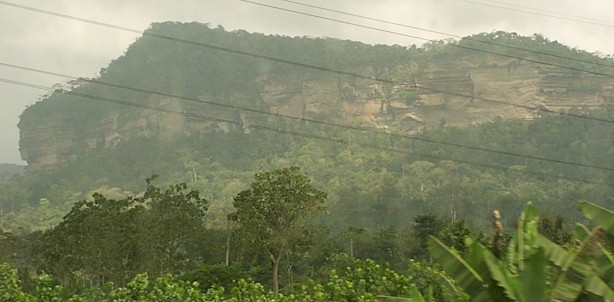
We piled back on the bus and ate a packed lunch as we drove out of Kumasi and back to Accra. On the way we stopped at this little village to use the bathroom (hah! a square of cement walls with a hole in the side) and as we were leaving, people passed their unfinished lunches out the windows to the usual crowd of children. And that crowd transformed. Instead of children there were sharks, fighting each other over the little bit of largess that seemed like somuchtoomuchneverenough. Moms got in too, and pushed children aside and screamed things and grabbed and it was so intense. We got on the bus, and drove away, but looking at the mountains in the distance, and the heartbreakingly beautiful countryside, all I could see was the determination and pleading on the face of this woman, who fought tooth and nail for the scraps of my lunch and stepped on a little girl, because her own baby needed to eat. The juxtaposition of such beauty and such abject suffering and ugliness is at the root of what Ghana is, I think. There is so much here, so much potential and beauty and generosity and creativity and desire, and at the same time there is nothing here. Not enough food or health care or education or unity or money or anything. And no matter what I do, it will never be enough. Children will still beg and hustle, babies will still cry, and this incredible place, held in the palm of God's hand, will never be supported. I did not know coming here that Africa would break my heart, but it has.

Subscribe to:
Post Comments (Atom)




No comments:
Post a Comment